











Under Pressure: The “Metamorphic Lessons” Hidden in Earth’s Toughest Rocks
Earth is the ultimate recycler, and nothing proves this better than metamorphic rocks. As explored by National Geographic on May 8, 2026, the study of Gneiss, Marble, and Slate is providing scientists with “wonder lessons” on how extreme stress can transform the ordinary into the extraordinary. These rocks are not just geological specimens; they are a testament to the planet’s ability to reinvent itself through heat and pressure.
1. The Alchemy of Gneiss: Beauty from Chaos
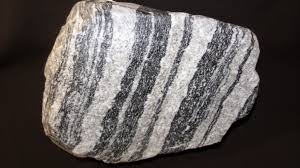
Gneiss (pronounced “nice”) represents the highest grade of metamorphism.
-
The Lesson of Order: Gneiss begins as a mix of minerals that, under immense heat, begin to separate into distinct, beautiful bands. This “foliation” teaches geologists about the direction and intensity of tectonic forces from billions of years ago.
-
Ancient Records: Because Gneiss is so durable, it often forms the “basement” of continents. Some of the oldest rocks on Earth are Gneiss, acting as a permanent hard drive for the planet’s earliest history.
2. Marble: The Purity of Rebirth
Marble is a “metamorphic miracle” that starts as humble limestone, often made of ancient seashells and coral.
-
The Lesson of Refinement: When limestone is subjected to heat, the calcium carbonate recrystallizes. The impurities that once clouded the rock are pushed into elegant “veins,” turning a dull grey stone into a brilliant, shimmering white or colorful masterpiece.
-
Human Connection: Marble bridges the gap between geology and art. National Geographic notes that the same geological pressure that created the Carrara mountains eventually allowed Michelangelo to carve the David, showing how the planet’s “stress” provides the raw material for human culture.
3. Slate: The Strength of Layers
Slate is the result of low-grade pressure acting on shale (mudstone), compressing it until it becomes exceptionally dense.
-
The Lesson of Precision: Slate is unique because it can be split into perfectly flat, thin sheets. This “slaty cleavage” occurs because the minerals within the rock realign themselves to be perpendicular to the pressure being applied.
-
Modern Utility: From the roofs of historical cathedrals to the chalkboards of 19th-century schools, slate is a reminder of how humans have harnessed the “structural alignment” of the Earth to build lasting civilizations.
4. Why “Metamorphism” Matters in 2026
Understanding these rocks is more critical today than ever for environmental and industrial reasons:
-
Carbon Storage: Scientists are investigating how certain metamorphic processes can naturally trap and store carbon dioxide, potentially providing a geological blueprint for carbon capture technology.
-
Tectonic Forensics: By studying the mineral “garnets” often found in metamorphic rock, researchers can track exactly how fast mountain ranges are growing or eroding in response to modern climate shifts.