











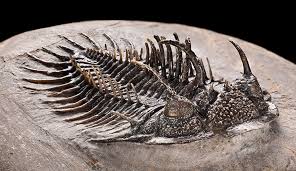
Lessons in Stone: What Ancient Fossils Teach Us About the Future of Our Planet
The history of Earth isn’t just written in books—it is etched into the very layers of the ground beneath our feet. As explored by National Geographic on May 8, 2026, the study of “fossil rocks” is undergoing a renaissance. Modern paleontologists are moving beyond simply identifying dinosaurs; they are using these ancient remains as “biological time machines” to understand how life survives—and fails—during periods of rapid environmental change.
1. The Rocks as Climate Ledgers
Fossils are much more than skeletal remains; they are chemical records of the atmosphere in which they lived.
-
Isotopic Fingerprints: By analyzing the oxygen and carbon isotopes trapped in fossilized shells and teeth, scientists can reconstruct the exact temperature and CO2 levels of Earth from millions of years ago.
-
The “Great Dying” Parallels: Researchers are looking closely at the Permian-Triassic extinction event. Fossilized records show that rapid ocean acidification and warming then look remarkably similar to the trends we see today, providing a sobering warning for our current ecological trajectory.
2. The “Lazarus” Species: Survival Secrets
One of the most profound lessons from the fossil record is the resilience of certain lineages.
-
Resilience Patterns: Scientists are studying “generalist” species—creatures that managed to survive multiple mass extinctions. The fossil rocks reveal that the ability to adapt to varied diets and environments was more important for long-term survival than being the “apex” predator.
-
Stasis vs. Evolution: Some fossils show species that haven’t changed for hundreds of millions of years (like the horseshoe crab), teaching us about the “evolutionary sweet spots” where a design is so perfect for its niche that it becomes nearly immortal.
3. The Wonder of “Deep Time”
The article highlights a growing movement to bring the “wonder” of geology back into the public eye.
-
Citizen Science: With the rise of high-resolution smartphone scanning and AI identification apps, amateur fossil hunters are contributing more to the global database than ever before.
-
Emotional Connection: Understanding that we are standing on the remains of ancient coral reefs or tropical forests (even in the middle of a modern city) fosters a sense of stewardship for the planet. It reminds us that humanity is just a brief chapter in a multi-billion-year epic.
4. New Technology in Paleontology
The way we look at these rocks has fundamentally changed in 2026.
-
Non-Invasive Imaging: Advanced CT scanning and particle accelerators now allow scientists to “see” inside solid rock, revealing delicate soft tissues and even the remains of a creature’s last meal without ever picking up a chisel.
-
Genetic Echoes: While “Jurassic Park” remains fiction, researchers are successfully extracting “environmental DNA” from the sediment surrounding fossils, allowing them to rebuild entire lost ecosystems.