








The Hormuz Black Hole: Why the Global Energy Recovery Could Take Until 2027
The Deepening Hormuz Shock: A Multi-Month Road to Recovery
On May 13, 2026, the International Energy Agency (IEA) and the Wall Street Journal released a sobering update on the state of global energy. The near-total closure of the Strait of Hormuz (which began in late February 2026) has evolved into the largest supply disruption in modern history, with effects that the agency warns will take “many months” to reverse even after the waterway is cleared.
The IEA’s “Bombshell” Forecast Revision
The most startling takeaway from the report is the massive downward revision of global oil demand for 2026:
-
The New Reality: The IEA now expects global demand to contract by 420,000 barrels per day (bpd) this year.
-
The Contrast: This is a drastic shift from the agency’s previous estimate of just an 80,000 bpd decline, and a total reversal of the pre-war growth projection of +730,000 bpd.
-
Demand Destruction: The high prices (peaking near $119/bbl) and physical scarcity have forced industries to cut production, governments to ration fuel, and consumers to permanently alter their habits—a phenomenon known as “demand destruction.”
Why Recovery is Not Instant
The WSJ analysis highlights that “reopening the gates” does not mean the oil starts flowing immediately.
-
The Mine Threat: The Strait remains littered with Iranian mines. De-mining operations by international naval forces are expected to take weeks of precision work before commercial insurance providers will cover tanker traffic again.
-
The “Billion-Barrel Hole”: Saudi Aramco CEO Amin Nasser noted that the world has lost a cumulative 1 billion barrels of supply over the last 2.5 months. Replenishing this “hole” in global inventories will require sustained overproduction that the market currently cannot support.
-
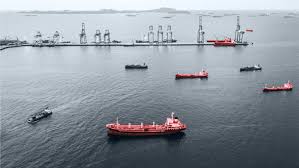
Logistical Backlog: There are currently over 200 loaded tankers stranded in the Persian Gulf. Clearing this queue and coordinating with refineries—many of which have slowed down due to lack of feedstock—will create a “multi-month lag” in normalized distribution.
Global Impact: Winners and Losers
-
The Most Vulnerable: Asia-Pacific nations (the Philippines, Vietnam, Thailand) that rely on the Strait for over 80% of their oil are facing acute shortages and soaring inflation.
-
The Most Insulated: The United States, as the world’s top producer and a net exporter, has used its Strategic Petroleum Reserve (SPR) to cushion the blow. U.S. Gulf Coast refiners are currently running at 95% utilization to fill the global vacuum.