











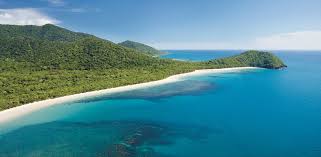
Where the Rainforest Meets the Reef: Exploring the Ancient Wonders of the Daintree
The Daintree Rainforest in Northern Australia is not just a forest; it is a living time capsule. As highlighted by Natural Habitat Adventures on May 7, 2026, this UNESCO World Heritage site represents the oldest continuous tropical rainforest on Earth—predating even the Amazon by tens of millions of years. It is a place of “evolutionary royalty,” where the lush green canopy literally spills onto the white sands of the Great Barrier Reef.
1. A Living Museum of Evolution
The Daintree has survived for over 180 million years, acting as a refuge for species that have long since vanished elsewhere.
-
Ancient Lineages: The forest contains the highest concentration of primitive flowering plant families in the world. Walking through the Daintree is essentially walking through a landscape that looks much as it did when dinosaurs roamed.
-
The Cassowary’s Kingdom: This is the home of the Southern Cassowary, a flightless, prehistoric-looking bird with a bright blue neck and a “helmet” (casque). As a major seed disperser, the cassowary is the “architect” of the rainforest; without them, many tree species would cease to exist.
2. Where Two Wonders Collide: Cape Tribulation
The Daintree is famous for being the only place on the planet where two World Heritage sites meet: the Daintree Rainforest and the Great Barrier Reef.
-
The Meeting Point: At Cape Tribulation, visitors can stand on the beach with 100-million-year-old ferns behind them and the world’s largest coral reef system directly in front of them.
-
Biological Synergy: The health of the reef is intrinsically linked to the forest. The Daintree’s root systems act as a natural filter, cleaning the water that flows into the Coral Sea, ensuring the reef remains vibrant.
3. Indigenous Stewardship: The Kuku Yalanji
The story of the Daintree is inseparable from its Traditional Owners, the Eastern Kuku Yalanji people, who have lived in harmony with this land for over 50,000 years.
-
The 2021 Handover: In a historic move, the Daintree was officially returned to the Kuku Yalanji people to be co-managed with the Queensland government.
-
Deep Connection: For the Kuku Yalanji, the forest is a pharmacy, a supermarket, and a spiritual cathedral. Their knowledge of “bush tucker” (forest food) and traditional medicine is central to modern conservation efforts.
4. Modern Challenges and Preservation
Despite its age, the Daintree is fragile. In 2026, the focus is on “connectivity” and “protection.”
-
Climate Resilience: Rising temperatures and changing rainfall patterns are shifting the “cloud line” of the mountains, threatening specialized species that live only at high altitudes.
-
Buy-Back Schemes: Conservation groups are actively buying back private land parcels within the Daintree to prevent development and create “wildlife corridors” that allow animals to move safely between habitats.
-
Sustainable Travel: Visitors are encouraged to engage in “low-impact” tourism that supports local indigenous guides and carbon-neutral lodges.