











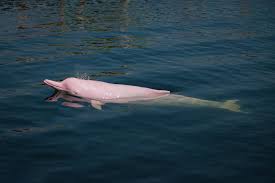
Ancient Legends, Modern Challenges: Protecting the Amazon’s Precious Pink Dolphins
In the heart of the Amazon, the Pink River Dolphin (or Boto) is more than just a biological wonder—it is a cultural icon steeped in mysticism. As explored in a featured story by Natural Habitat Adventures on May 4, 2026, these “Encantados” are currently caught between their ancient status as magical shapeshifters and the harsh realities of 21st-century environmental degradation.
1. The Legend of the “Encantado”
Amazonian folklore has long protected the Boto through a mixture of reverence and fear.
-
The Shapeshifter: Legend tells of the Boto transforming into a handsome man in a white suit and hat (to hide his blowhole) who seduces villagers during evening festivals.
-
The Underwater City: It is said that those who swim alone may be whisked away to Encante, a magical subaquatic kingdom.
-
Cultural Taboo: Historically, killing a dolphin was considered a bringer of extreme bad luck, a belief that provided a “spiritual shield” for the species for centuries.
2. Evolutionary Marvels of the Boto
The Pink River Dolphin has adapted perfectly to the “Flooded Forest” (Várzea) of the Amazon Basin.
-
Flexible Anatomy: Unlike marine dolphins, their neck vertebrae are unfused, allowing them to turn their heads 180 degrees to navigate through tangled underwater roots and branches.
-
Sensory Precision: Because the Amazon’s waters are often tea-colored or turbid, they rely on highly sophisticated echolocation to hunt over 50 species of fish, including piranhas.
-
The Color Mystery: They are born gray and turn pink as they age. This is partly due to capillary placement near the skin and, in males, scar tissue from social “play-fighting.”
3. Modern Challenges: The Threat Profile
Despite their legendary status, the 2026 outlook for the Boto is increasingly precarious.
-
Mercury Contamination: Illegal gold mining in the Amazon uses mercury to separate gold, which then leaches into the river. As apex predators, dolphins accumulate toxic levels of mercury in their systems.
-
The Mota Catfish Trade: In some regions, dolphins are illegally hunted to be used as bait for Mota catfish, which are then sold in urban markets.
-
Habitat Fragmentation: Hundreds of planned dams across the Amazon threaten to cut off dolphin populations from one another, leading to genetic isolation and “bottlenecks.”
-
Climate Extremes: The 2023–2025 droughts saw water temperatures in some Amazonian lakes soar to lethal levels, causing mass mortality events.
4. The Path to Protection
Conservationists are moving toward a model that combines high-tech research with indigenous wisdom.
-
Community Guardians: Organizations are working with riverside communities to restore the traditional taboos against harming dolphins, turning former hunters into “eco-guardians.”
-
Sustainable Ecotourism: By showing that a live dolphin is worth more as a tourism draw than as bait, groups like Nat Hab and WWF are creating economic incentives for protection.
-
Satellite Tracking: Researchers are using non-invasive tags to map “dolphin corridors,” helping governments decide where to pause dam construction or industrial projects.