









Planetary Solvency: Tipping Points and the Catastrophic Risks of Nature Loss
A landmark report released in May 2026, titled “Planetary Solvency: Tipping into the Wild Unknown,” has issued a stark warning: the global economy is operating on a “biological overdraft” that is rapidly approaching a point of systemic collapse. Authored jointly by the Institute and Faculty of Actuaries (IFoA) and Anglia Ruskin University (ARU), the report argues that biodiversity loss is no longer just an ecological concern but a primary driver of financial and social instability.
The research highlights how interconnected environmental systems are nearing thresholds where changes become abrupt, irreversible, and catastrophic.
The Concept of “Planetary Solvency”
The report frames the Earth’s ecosystems as a “finite ledger of biological wealth.” For decades, human industry has treated this as an infinite extraction fund.
-
The Math Problem: We are consuming natural capital faster than it can regenerate.
-
Financial Risk: Actuaries warn that if nature “goes bankrupt,” the resulting shocks to food systems and supply chains will trigger structurally high inflation and permanent economic contraction.
Critical Tipping Points Identified
The report identifies several “tipping points” where gradual decline shifts into sudden, catastrophic failure:
-
Pollinator Collapse: The decline of insects that underpin 75% of global crop production, threatening a total failure of the global food system.
-
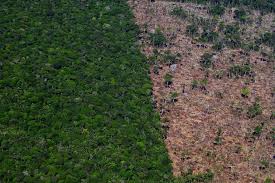
Amazon Dieback: Large-scale deforestation is reaching a point where the rainforest can no longer produce its own rainfall, potentially turning the “lungs of the planet” into a dry savannah.
-
Marine Ecosystem Failure: The combination of overfishing, warming, and acidification is pushing fish populations toward a collapse that would eliminate a primary protein source for billions.
-
Soil Degradation: Chronic loss of topsoil is already leading to lower yields and higher food price volatility.
The “Double Whammy”: Geopolitics & Climate
The report emphasizes that these risks do not happen in a vacuum. Nature loss is being compounded by:
-
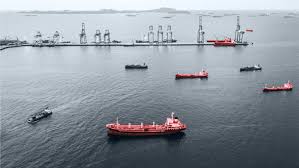
Fertilizer Supply Shocks: Disruption to supply chains (such as those in the Strait of Hormuz) is making a fragile food system even more vulnerable.
-
Climate Feedback Loops: As forests and permafrost fail, they release stored carbon, accelerating global warming and pushing other ecosystems past their limits even faster.
Recommendations for a “Nature-Positive” Future
To avoid a systemic “bankruptcy” of our natural world, the IFoA and ARU recommend:
-
Integrating Nature into Finance: Moving away from measuring only GDP to incorporating “natural capital” into all national and corporate balance sheets.
-
Urgent Investment: Moving from “crisis response” to “prevention” by investing in sustainable land use and pollinator protection now.
-
Action Over Precision: The lead authors argue we must stop waiting for “perfect data” before acting; the trends are clear enough to demand radical policy shifts immediately.