











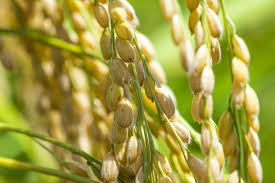
The Rhythm of Life: How the Sound of Rain “Awakens” Dormant Seeds
In a groundbreaking study published in Scientific Reports in April 2026, MIT researchers have provided the first direct evidence that plant seeds can “hear” the world around them. While we’ve long known that water triggers growth, it turns out that the acoustic vibrations of falling raindrops act as a biological alarm clock, signaling seeds to sprout even before they are fully soaked.
This discovery, led by mechanical engineers Nicholas Makris and Cadine Navarro, reveals a hidden sensory layer in the plant kingdom that helps ensure survival in the wild.
The MIT Experiment: 8,000 Seeds and a Hydrophone
To isolate sound from physical contact, researchers conducted a massive study using rice seeds submerged in shallow water:
-
The Setup: Roughly 8,000 seeds were placed in tubs. Some were exposed to the sounds of dripping water—mimicking light to heavy rain—while others remained in silence.
-
The Distance: The seeds were positioned far enough from the droplets that no actual splashes or water movement reached them—only the sound waves traveling through the water.
-
The Result: Seeds exposed to the “rhythm of rain” germinated 30% to 40% faster than those in the silent group.
How Do Seeds “Hear” Without Ears?
Plants don’t have ears, but they are incredibly sensitive to physical tremors. The study identified a specific mechanical trigger inside the seed:
-
Statoliths: These are tiny, gravity-sensing grains (organelles) inside plant cells that usually tell a plant which way is “up” so roots grow down and shoots grow up.
-
The “Jostle” Effect: The sound waves from a raindrop’s impact—which can be as loud as a jet engine at close range underwater—create enough energy to physically shake these statoliths.
-
The Wake-Up Call: This “gentle nudge” from the vibrations triggers a chemical signal that breaks the seed’s dormancy, effectively telling it, “The environment is favorable; start growing now.”
The Survival Advantage: Depth Perception
Why would a seed evolve to hear rain? Researchers believe it’s a way for the seed to judge its position in the soil:
-
Optimal Depth: Seeds closer to the surface feel the vibrations more intensely. These seeds are at the perfect depth to reach sunlight quickly once they sprout.
-
Risk Mitigation: If a seed is buried too deep, the vibrations are dampened. By only “waking up” to strong rain sounds, the seed avoids wasting energy on a climb to the surface it might not finish.
“Falling Rain Awakens the Soil”
The study brings a literal scientific truth to an ancient Japanese microseason phrase: “Falling rain awakens the soil.” It suggests that the “pitter-patter” we find soothing is, for a seed, a high-energy call to action.
Scientists believe this trait isn’t exclusive to rice; many other crops and wild plants likely use similar acoustic cues to time their entry into the world, potentially opening new doors for acoustic agriculture—using sound to improve crop yields and germination rates.