











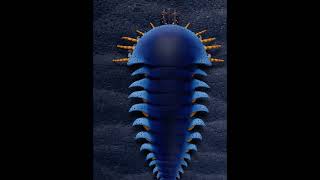
The “Spider-Scorpion” Mystery: Fossil Claws Reveal an Ancient Kinship
A fascinating paleontological study published in late April 2026 has reshaped our understanding of how spiders and scorpions evolved. By analyzing exceptionally preserved 400-million-year-old fossils, researchers from the University of Kansas and the Natural History Museum, London, have identified a “missing link” in the evolution of arachnid appendages.
1. The Discovery: Chelicerae vs. Claws
The study focuses on a group of extinct marine arthropods called Eurypterids (sea scorpions) and their relationship to modern Arachnids (spiders, scorpions, and mites).
-
The Hidden Joint: Using high-resolution micro-CT scanning, scientists discovered a tiny, previously overlooked joint in the mouthparts (chelicerae) of ancient sea scorpions.
-
The Transformation: This joint proves that the specialized fangs of a modern spider and the grasping claws of a scorpion actually evolved from the same multi-segmented leg-like limb found in their aquatic ancestors.
-
Evolutionary “Swiss Army Knife”: What started as a simple walking leg was “recycled” by evolution into a diverse array of tools—from the venom-injecting fangs of a tarantula to the crushing pincers of a forest scorpion.
2. The 2026 Breakthrough: Soft Tissue “Ghosts”
The 2026 research was made possible by a new imaging technique called Phased-Contrast X-ray Tomography. This allowed scientists to see the “ghosts” of muscles and tendons inside the fossils.
-
Muscle Attachment Points: By seeing where muscles were attached to the fossilized claws, researchers could determine exactly how these ancient creatures moved their limbs.
-
Closing the Gap: The muscle patterns in the 400-million-year-old fossils are nearly identical to those found in modern horseshoe crabs, confirming they are the closest living relatives to the extinct sea scorpions.
3. Why It Matters: The Great Land Conquest
This fossil evidence explains how arachnids became some of the first animals to successfully colonize land.
-
Adaptability: The ability to modify their mouthparts allowed these creatures to hunt a wide variety of prey as they moved from the ocean floor to the forest floor.
-
Engineering Success: The study highlights that the “pincer” design is one of nature’s most successful engineering feats, remaining largely unchanged for nearly half a billion years.
Arachnid Evolutionary Snapshot
| Feature | Ancient Ancestor (Eurypterid) | Modern Descendant (Spider/Scorpion) |
| Habitat | Shallow Oceans/Estuaries | Land/Freshwater |
| Primary Tool | Multi-jointed grasping limbs | Specialized fangs or pincers |
| Size | Up to 2.5 meters (Giant Sea Scorpion) | Millimeters to Centimeters |
| 2026 Finding | Shared muscle-attachment patterns | Highly specialized but structurally linked |