










Stop the Torture: How Your Bad Habits Are Killing Your Charging Cables
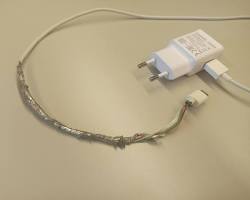
We’ve all been there: you plug in your phone, but you have to wiggle the cord at a very specific angle just to get that charging icon to appear. As a recent report from BBC Future reveals, charging cables are often the most abused pieces of technology we own. From “mummifying” them in tight coils to using them as literal anchors, our daily habits are causing microscopic damage that eventually leads to total failure.
1. The “Paperclip” Effect: Atomic Dislocations
The core of the problem is physics. Inside your cable are tiny copper wires. When you bend those wires, you’re not just moving a string—you’re shifting atoms.
-
The Science: Every time you bend a cable beyond its “elastic range,” the bonds between atoms break and reform in a messy way called dislocations.
-
The Snap: Just like a paperclip that snaps after being bent back and forth, these dislocations eventually harden the metal until it cracks. Once enough of those tiny wires inside the insulation snap, your cable is toast.
2. The Anchor Point: The Connector vs. The Cord
According to experts from iFixit and the Center for Advanced Life Cycle Engineering, almost all cable deaths happen at the junction where the cord meets the plug.
-
The Pull Test: Many of us are “lazy unpluggers”—we grab the long end of the cord and yank it out of the wall or phone. This puts massive stress on that delicate junction.
-
The Fix: Always pull from the hard plastic or metal connector itself, not the flexible cord.
3. “Cruel” Daily Scenarios
The BBC highlights a few common ways we “torture” our tech without realizing it:
-
The Car Cup Holder: Many drivers plug in their phone and then shove it into a cup holder. This forces the cable to bend at a sharp, 90° angle while the weight of the phone (and the bouncing of the car) grinds down on that joint.
-
The Bedside Stretch: Using your phone while lying in bed often involves pulling the cable taut or resting the phone on your chest in a way that kinks the connector. If your cable is too short for the distance to the outlet, you are essentially stretching its lifespan away.
-
Tight Coiling: While pro audio engineers use a fancy “over-under” loop, for small charging cables, the key is simply loose circles. If you wrap it tightly around your hand or the power brick, you’re forcing the internal wires into a permanent state of stress.
4. The Rise of the Braid
Have you noticed more cables coming with a “fabric” or braided exterior? This isn’t just for fashion.
-
Shielding: Braided cables provide an extra layer of mechanical protection that prevents the internal wires from kinking at extreme angles.
-
Durability: Companies like Apple and Samsung are increasingly switching to these because they better withstand the “friction” of daily life.
5. Takeaway: Treat Your Tech with Respect
Cables are unglamorous, but they are the lifeblood of our digital world. By making small changes—unplugging from the head, avoiding sharp angles, and buying the right length for your space—you can ensure your cable lasts longer than the device it’s charging.