










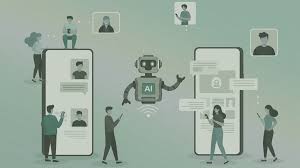

The Fear Factor: Why AI Companies Want You to Be Afraid of Them
In an era where “artificial intelligence” is the buzzword of the century, a provocative report from BBC Future in April 2026 suggests that the fear surrounding AI isn’t just a byproduct of science fiction—it’s a calculated marketing strategy. While we often worry about “rogue robots” or “superintelligence,” the reality may be that AI companies are using these apocalyptic narratives to solidify their market power and distract from more immediate, grounded issues.
1. The “Too Powerful to Release” Tactic
One of the most effective PR moves in recent tech history is the announcement of a model that is “too dangerous” for public consumption.
-
The Forbidden Fruit: By claiming a technology is catastrophic, companies create an aura of immense power around their products. As the BBC notes, you don’t see food companies claiming they’ve made a burger “so delicious it’s unethical to sell.”
-
Creating Hype: This “scary” branding helps justify high valuations and massive investments, framing the company not just as a software developer, but as the gatekeeper of a world-altering force.
2. Distraction from Real-World Harms
By focusing the public conversation on “existential risks” (like AI taking over the world), companies can effectively sidestep more immediate, measurable problems.
-
Current Issues: These include data privacy breaches, copyright infringement, the massive energy consumption of data centers, and the displacement of entry-level workers (like the recent decline in computer science enrollment).
-
The “Skynet” Shield: It is much easier for a CEO to talk about saving humanity from a hypothetical future “superintelligence” than it is to address why their current model is hallucinating legal advice or scraping artists’ work without permission.
3. Regulatory Capture: “Only We Can Handle This”
Fear is a powerful tool for shaping government policy.
-
Raising the Bar: If AI is framed as a “weapons-grade” technology, companies can push for heavy regulations that only the largest, wealthiest firms can afford to follow.
-
Killing Competition: By advocating for strict licensing and “safety” guardrails, established giants can prevent smaller, open-source competitors from entering the market, ensuring that only a few “trusted” companies control the future of the technology.
4. The Myth of the “Magic” Software
The BBC analysis reminds us that beneath the hype, AI is fundamentally software.
-
Inert Without Intention: AI doesn’t “want” anything. It requires human prompts, data, and infrastructure to function.
-
Human Accountability: When an AI “agent” fails or deletes a database, the root cause is often a social or organizational failure (like poor permissions) rather than a technological “rebellion.”
5. Why the Narrative Works
Humans are naturally wired to pay attention to threats. Pop culture—from HAL 9000 to The Terminator—has spent decades priming us to expect the worst from machines. Tech companies tap into these existing fears to ensure their products remain at the center of the global conversation, turning a useful tool into an “earth-shattering” phenomenon.