











The World’s Oldest Dog: DNA Rewrites the History of “Man’s Best Friend”
In a massive scientific breakthrough from March and April 2026, two major studies published in the journal Nature have officially identified the oldest domestic dog DNA ever recorded. This discovery pushes back the genetic timeline of our relationship with dogs by nearly 5,000 years.
Researchers from the Natural History Museum in London, Oxford, and LMU Munich used advanced “hybridization capture” techniques to extract whole genomes from ancient remains, proving that dogs were part of human society long before we invented agriculture.
1. The Record Breakers: Turkey and Switzerland
The 2026 findings reveal that by the end of the last Ice Age, dogs were already widespread across Western Eurasia.
-
The Pınarbaşı Puppy (Turkey): The title for the world’s oldest genetically confirmed dog goes to a 15,800-year-old remains found in a rock shelter in Turkey. Analysis suggests she was a female puppy, likely looking like a small wolf, who lived with hunter-gatherers.
-
The Kesslerloch Dog (Switzerland): Coming in at 14,200 years old, this Swiss fossil is the oldest confirmed dog in Europe.
-
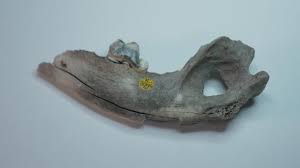
The Gough’s Cave Jawbone (UK): A 14,300-year-old jawbone found in England’s famous Somerset cave. What makes this special is that the skull showed decorative perforations, suggesting the dog held deep cultural or funerary significance to the humans of the time.
2. The “Single Origin” Theory
The most significant part of the 2026 research is the evidence for a single, rapid spread.
-
Fast Expansion: Despite being 4,000 km apart, the dogs in England, Switzerland, and Turkey were genetically very similar. This suggests that once humans “unlocked” the secret of taming wolves, the “technology” of the dog spread like wildfire across the continent.
-
Genetic Abyss: Scientists noted a “genetic abyss” between these early dogs and wolves. By 16,000 years ago, they were already biologically distinct populations, meaning the initial split from wolves likely happened between 27,000 and 40,000 years ago.
-
Ancestry Links: Interestingly, these ancient dogs are more closely related to modern Boxers and Salukis than to Arctic breeds like Huskies.
3. More Than Just Hunters: The Human Bond
Isotope analysis of the bones reveals a surprising level of care:
-
Shared Meals: Chemical signatures show that hunter-gatherers were feeding their dogs the same food they ate, including fish and scavenged meat.
-
Intentional Burials: In Turkey, dogs were found buried directly on top of humans, a sign of emotional attachment that predates the domestication of sheep or cattle by over 10,000 years.
Timeline of Dog Domestication (2026 Update)
| Event | Estimated Date | Significance |
| Initial Wolf Split | ~35,000 Years Ago | Wolves begin diverging from the main lineage. |
| First Genetic Dog | 15,800 Years Ago | The Pınarbaşı (Turkey) puppy; distinct from wolves. |
| European Expansion | ~14,000 Years Ago | Dogs confirmed in Switzerland, UK, Germany, and Italy. |
| Farming Revolution | ~10,000 Years Ago | Humans adopt agriculture; dogs are already “old friends.” |