











The Last Stand of the Asiatic Lion: Inside the Fragile Success of Gir National Park
While the African lion dominates the global imagination, a unique and regal subspecies survives in just one corner of the world: the Asiatic Lion. As explored by National Geographic on May 8, 2026, the story of Gir National Park in Gujarat, India, is one of the most remarkable—yet precarious—conservation success stories in history.
1. The Distinctive King: Asiatic vs. African
Though they share a common ancestor, the Asiatic lion (Panthera leo leo) has evolved distinct physical traits due to thousands of years of isolation.
-
The Longitudinal Fold: The most striking feature of the Asiatic lion is a distinctive fold of skin running along its belly, a trait rarely seen in African lions.
-
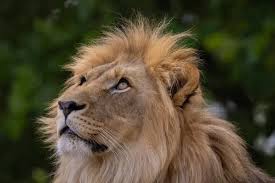
The Manes: Males have shorter, sparser manes that leave their ears visible. This evolution may be an adaptation to the denser scrub forest of Gir, compared to the open African savannah.
-
Social Structure: Asiatic lions are generally smaller and live in smaller prides. Interestingly, male Asiatic lions are less social, often only joining the females to mate or share a large kill.
2. A “Bottleneck” Success Story
At the turn of the 20th century, hunting and habitat loss had reduced the Asiatic lion population to as few as 20 individuals.
-
Royal Intervention: The Nawab of Junagadh is credited with first protecting the remaining lions, a mission later taken up by the Indian government.
-
Current Numbers: Today, the population has rebounded to over 700, a testament to the dedicated forest guards and the local Maldhari community.
-
The Genetic Risk: Because the entire population descended from such a small group, they are “genetic clones” of one another. This lack of diversity makes the entire species highly vulnerable to a single disease outbreak, such as Canine Distemper Virus (CDV).
3. Living with Lions: The Human-Wildlife Bond
Gir is unique because it is not a wilderness devoid of people. The Maldhari pastoralists have lived alongside the lions for generations.
-
Coexistence: The lions often prey on the Maldharis’ livestock, yet there is a deep cultural respect for the “Sih.” The community generally views the loss of an animal as a “religious offering” rather than a reason for retaliation.
-
The Forest Guards: A significant portion of the frontline forest guards in Gir are women. Known as the “Lion Queens of India,” they are instrumental in tracking prides, managing rescues, and mitigating human-animal conflict.
4. The Future: Seeking a Second Home
The primary debate in 2026 remains the “translocation” of some lions to a second site to prevent total extinction from a localized disaster.
-
The Kuno Proposal: Scientists have long advocated for moving a small group of lions to the Kuno National Park in Madhya Pradesh. However, the plan has faced political and logistical hurdles, as the lions are a point of intense regional pride for Gujarat.
-
Expanding Boundaries: As the population grows, lions are naturally wandering outside the protected park, often being spotted on beaches and in agricultural fields in the Greater Gir region. This “overflow” is the new frontier for conservation, requiring a shift from “park management” to “landscape management.”