











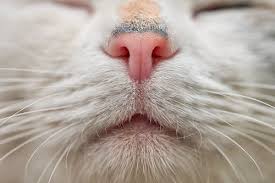
Inside the Feline Mind: The Extraordinary Sensory World of the Domestic Cat
What does it feel like to be a cat? While humans experience the world primarily through sight and sound, a cat’s reality is a complex, high-definition overlay of scent, vibration, and “twilight vision.” As explored by National Geographic on May 8, 2026, recent studies into feline neurobiology and behavior are finally pulling back the curtain on the private, highly efficient internal life of our most mysterious companions.
1. The World in Blue and Grey: Feline Vision
A cat’s eyes are built for the “crepuscular” lifestyle—hunting at dawn and dusk.
-
Low-Light Superpowers: Cats have a high density of rods (light-sensitive cells) and a reflective layer behind the retina called the tapetum lucidum. This creates the famous “eye shine” and allows them to see in just one-sixth of the light humans require.
-
The Trade-Off: To gain night vision, cats sacrificed color and detail. They are essentially colorblind to reds and see the world in muted shades of blue, green, and yellow. They are also “farsighted,” struggling to focus on anything closer than ten inches.
2. The “Sixth Sense”: Whiskers and Vibrations
To a cat, “touch” is something that happens before they even reach an object.
-
Tactile Radar: Whiskers (vibrissae) are deeply embedded in the body and connected to the somatosensory cortex. They detect minute changes in air currents, allowing a cat to “feel” the size and shape of an opening or the movement of prey in total darkness.
-
The Carpal Whisker: Most people don’t notice the whiskers on the back of a cat’s front legs. These help the cat determine the position and movement of prey they have already caught but cannot see clearly under their chin.
3. A Symphony of Scents: The Jacobson’s Organ
While we might smell a pizza, a cat “smells” a story. Their sense of smell is roughly 14 times stronger than a human’s.
-
The Flehmen Response: Have you ever seen a cat pull a “grimace” with an open mouth? They are using the vomeronasal (Jacobson’s) organ in the roof of their mouth. This allows them to “taste” chemical signals (pheromones) in the air, providing data on the health, identity, and status of other animals.
-
Scent Mapping: To a cat, your home is a map of territorial “markers.” When they rub their cheeks on you, they are essentially “bookmarking” you as a safe, known part of their world.
4. The Social Enigma: Solitary but Connected
The article challenges the myth that cats are “loners.”
-
The “Meow” as a Tool: In the wild, adult cats rarely meow at each other. They developed the meow almost exclusively to communicate with humans—a specialized vocalization evolved to get our attention and mimic the frequencies of a crying human infant.
-
Slow Blinking: In the feline world, eye contact is a challenge. The “slow blink” is a cat’s way of saying, “I am vulnerable with you, and I trust you.”