











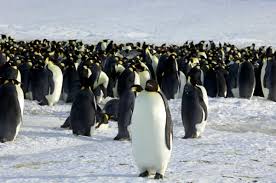
Frozen Out: Why Emperor Penguins Have Officially Joined the Endangered Species List
The most iconic residents of the Antarctic are facing their greatest survival challenge yet. According to a landmark report from the World Wildlife Fund (WWF), the Emperor Penguin has been formally reclassified as Endangered. As reported on May 7, 2026, this shift in status is a direct response to the accelerating loss of sea ice, which serves as the literal foundation for the species’ entire lifecycle.
1. The Sea Ice Crisis: A Crumbling Home
Unlike many other species that can migrate to new territories, Emperor Penguins are “ice-obligate” creatures.
-
Breeding Grounds: They depend on stable “fast ice”—sea ice attached to the land—to breed and raise their chicks.
-
The 2026 Tipping Point: Recent satellite data shows that Antarctic sea ice levels have hit record lows for three consecutive years. In several key colonies, the ice melted before chicks grew their waterproof feathers, leading to catastrophic breeding failures.
-
Food Chain Disruption: The loss of ice also impacts the abundance of krill, the primary food source for penguins, seals, and whales.
2. Predicting the “Extinction Vortex”
Conservation biologists warn that without drastic intervention, the current trajectory is grim.
-
Population Projections: Experts estimate that if global warming continues at its current rate, nearly 90% of Emperor Penguin colonies could be “quasi-extinct” by the end of the century.
-
Genetic Isolation: As colonies disappear, the remaining groups become more isolated, reducing genetic diversity and making the species more vulnerable to disease.
3. What the “Endangered” Listing Changes
The reclassification from “Near Threatened” to “Endangered” is more than just a label; it triggers significant international legal and conservation actions.
-
Increased Protection: The status mandates stricter regulations under the Antarctic Treaty System, limiting human interference and tourism near known breeding sites.
-
Global Policy Leverage: This listing provides environmental organizations with the legal standing to push for more aggressive carbon emission targets on a global scale.
-
Dedicated Funding: Conservation groups will now have access to specialized “Endangered Species” grants for satellite monitoring, habitat research, and potential “assisted colonization” experiments.
4. A Call to Action: The “Last Stand” Strategy
The WWF is emphasizing that the fate of the Emperor Penguin is not yet sealed.
-
Marine Protected Areas (MPAs): There is an urgent push to create a massive network of MPAs around Antarctica to eliminate competition from industrial fishing.
-
The “Carbon Connection”: WWF’s lead scientists argue that protecting the Emperor Penguin is synonymous with meeting the goals of the Paris Agreement. “We cannot save the penguin without saving the ice,” they stated.