











Solar Surge: High Solar Activity Triggers “Orbital Cleanup” as Space Junk Falls Faster
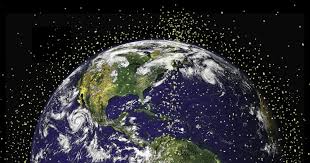
A new study published on May 6, 2026, in Frontiers in Astronomy and Space Sciences reveals that Earth’s orbit is undergoing a period of intense “natural cleaning.” As reported by Space.com, increased solar activity is causing space debris to lose altitude and crash into Earth’s atmosphere significantly faster than usual, a discovery that could redefine how we manage the 130 million pieces of junk currently circling our planet.
The “Drag” Effect: How the Sun Cleans Orbit
The research, led by Ayisha Ashruf from the Vikram Sarabhai Space Centre in India, tracked 17 pieces of space junk launched as far back as the 1960s over a 36-year period.
-
Atmospheric Expansion: When the Sun reaches its active phase (Solar Maximum), it emits intense extreme ultraviolet (EUV) radiation. This energy heats Earth’s thermosphere, causing it to expand outward.
-
Increased Resistance: As the atmosphere reaches higher into space, satellites and debris in Low Earth Orbit (LEO) encounter much denser air. This creates atmospheric drag, which acts like a “brake,” slowing down the objects.
-
The 67% Threshold: For the first time, researchers identified a specific tipping point: once solar activity reaches 67% of its peak intensity, the rate at which space junk loses altitude increases dramatically.
A Double-Edged Sword for Space Safety
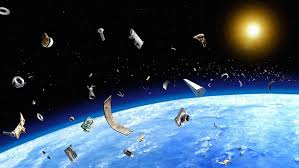
While the Sun is effectively helping “vacuum” the lower orbits of dead satellites and rocket stages, this phenomenon creates a complex set of challenges for active missions:
-
Fuel Depletion: Operational satellites, such as the Starlink mega-constellation and the International Space Station (ISS), must burn more fuel to perform “station-keeping” maneuvers to fight the extra drag.
-
Collision Uncertainty: While junk falls faster, its path becomes more unpredictable. Increased drag makes it harder for tracking systems to pinpoint exactly where a piece of debris will be in 24 hours, raising the risk of “conjunctions” (close calls).
-
The “CRASH Clock”: Recent data from the Outer Space Institute shows that if human control over satellite maneuvers were lost during such high solar activity, a catastrophic collision could occur in as little as 2.8 to 3 days.
Sustainability in the “Active” Era
With solar activity currently at its highest levels since 2022, the study warns that missions launched during this period must be designed with higher fuel margins.
-
Orbital Decay: Debris that typically takes decades to fall could now re-enter in just a few years.
-
Future Planning: “This observation is key for planning sustainable space operations,” Ashruf noted. Scientists can now use solar cycle predictions to better estimate the “lifespan” of debris and prioritize which high-risk objects need active robotic removal.