











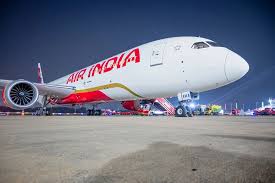
Air India’s Flight Reductions: Navigating a Global Crisis
As of early May 2026, Air India has confirmed it will slash nearly 100 domestic and international flights through July. This drastic move is a direct response to a “perfect storm” of surging fuel costs and geopolitical instability in West Asia.
The airline, which was already navigating a challenging financial year with estimated losses exceeding ₹22,000 crore, is now entering an “adjustment phase” to prevent further unviable operations.
1. The Financial Catalyst: ATF Price Surge
Aviation Turbine Fuel (ATF) typically accounts for 40% of an airline’s operating costs, but recent spikes have pushed this toward 60% for Indian carriers.
-
Global Volatility: The ongoing conflict in the Middle East has sent jet fuel prices soaring. While the Indian government capped domestic price hikes at 25% to protect local connectivity, international ATF prices have surged by as much as ₹73 per litre.
-
The Surcharge Limit: CEO Campbell Wilson noted that while the airline has implemented fuel surcharges, there is a “ceiling.” Raising fares too high causes “demand destruction,” where travelers simply choose to stay home rather than pay exorbitant ticket prices.
2. The Operational Trap: Airspace Closures
The conflict in West Asia has turned the skies into a logistical maze.
-
Longer Reroutes: With Iranian and Iraqi airspace either closed or restricted, Air India’s long-haul flights to Europe and North America must take massive detours.
-
The Burn Rate: These reroutes can add up to two hours of flight time. For a wide-body aircraft, two extra hours of flying while burning record-priced fuel makes many routes—especially those to London, New York, and Paris—financially impossible to maintain.
-
Grounding Wide-Bodies: Rather than flying at a guaranteed loss, Air India has chosen to ground several of its large, long-range aircraft on specific days.
3. Impacted Routes (June–July 2026)
The cuts will be most visible on high-frequency and long-haul international corridors.
| Region | Impact Level | Key Cities Affected |
| North America | High | New York (JFK/EWR), San Francisco, Chicago |
| Europe | High | London (LHR), Paris, Frankfurt |
| Australia | Moderate | Sydney, Melbourne |
| Southeast Asia | Moderate | Singapore, Bangkok |
| Domestic | Low | Metro-to-metro frequencies (Delhi-Mumbai) |
4. Industry-Wide Alarm
Air India isn’t alone. The Federation of Indian Airlines (FIA)—representing Air India, IndiGo, and SpiceJet—has warned the Civil Aviation Ministry that the industry is on the verge of a “fatality.”
-
Call for Relief: Airlines are seeking an urgent reduction or deferment of the 11% excise duty on ATF to stay afloat.
-
Shift in Strategy: The industry is moving from “expansion” to “survival,” prioritizing high-yield routes and cutting marginal “prestige” flights that no longer pay for their own fuel.