







Revolutionary New Material: Thinner Than Hair and Stretchy Like Rubber
Scientists have developed a breakthrough material that could redefine protection for both humans and electronics in space. This ultra-thin, flexible shield—developed by the Korea Institute of Science and Technology (KIST)—was detailed in a study published on May 1, 2026. It solves a long-standing “weight vs. safety” dilemma in aerospace engineering.
1. The Technology: A Nanotube Powerhouse
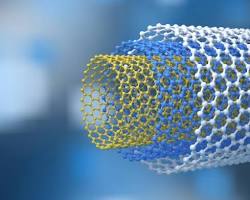
The secret to this material lies in its composite structure, combining two different types of nanotubes into a single, hair-thin layer:
-
Carbon Nanotubes (CNTs): These are highly conductive and specialize in reflecting and absorbing electromagnetic waves.
-
Boron Nitride Nanotubes (BNNTs): These are rich in boron, making them exceptionally effective at capturing neutron radiation.
-
Single-Layer Solution: Historically, these two types of radiation required separate, bulky materials. This new composite blocks 99.999% of electromagnetic waves and 72% of neutron radiation in one thin film.
2. Built for the Extremes of Space
Space is not just radioactive; it is physically punishing. This material is designed to survive:
-
Elasticity: It can stretch to double its length without losing its shielding properties. This allows it to be wrapped around complex parts or integrated into flexible spacesuits.
-
Temperature Resilience: It remains stable in temperatures ranging from -196°C (liquid nitrogen cold) to 250°C (extreme heat).
-
3D-Printable: Because it is flexible and can be made into an “ink,” it can be 3D-printed into custom shapes. Research showed that a honeycomb pattern actually improved shielding effectiveness by an additional 15%.
3. Why Weight Matters
In spaceflight, every gram counts. Launching heavy lead or thick polymer shields into orbit is incredibly expensive.
-
The “Tape” Concept: Lead researcher Dr. Joo Young-ho describes the material as being “as thin as tape and as flexible as rubber.”
-
Payload Efficiency: By replacing heavy shielding with this lightweight film, agencies like NASA or private companies can carry more scientific equipment or fuel instead of “dead weight” protection.
4. Applications Beyond the Stars
While designed for the “Space Age,” this technology has immediate uses on Earth:
-
Medical Gear: Protecting doctors and patients from X-rays and specialized radiation treatments.
-
Electronics: Shielding sensitive semiconductors in self-driving cars or 5G infrastructure from interference.
-
Wearables: Creating lightweight, protective clothing for workers in nuclear power plants or high-altitude aviation.