










Magnetic Mysteries: RPS and MARIE to Probe Apophis During Its Earth Flyby
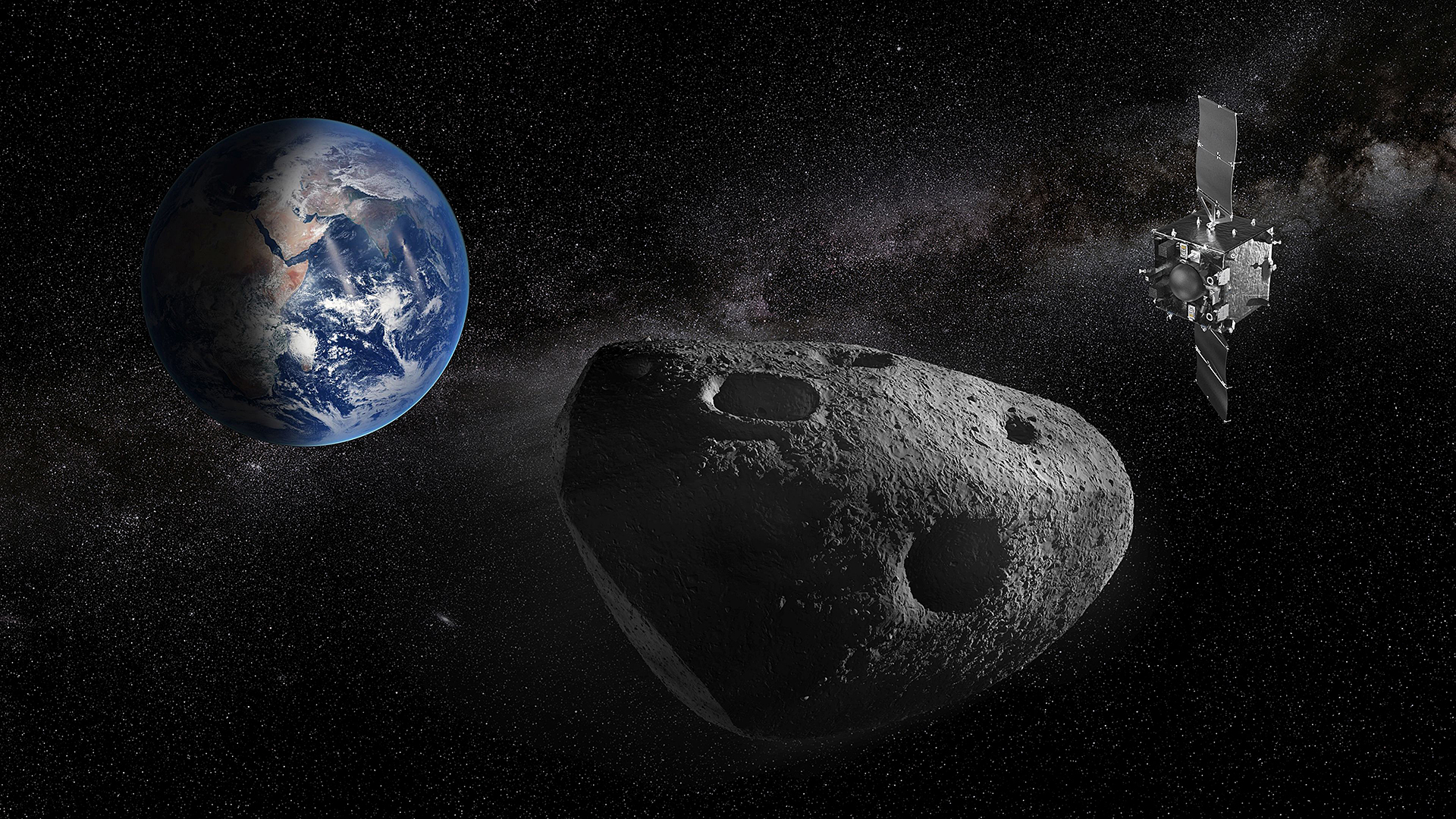
The RAMSES Mission: A Front-Row Seat to a Cosmic Encounter Asteroid Apophis is famous not for a collision, but for a “near miss” that is scientifically invaluable. In early 2026, preparations are in full swing for the RAMSES (Rapid Apophis Mission for Space Safety) spacecraft. A sibling to the Hera mission, RAMSES will accompany Apophis as it dives through Earth’s outer radiation belt and magnetosphere.
To help us understand this interaction, two key instruments—RPS and MARIE—are being prepared to measure the invisible forces at play.
RPS: The Plasma Twin from Jupiter The RAMSES Plasma Spectrometer (RPS) wasn’t originally built for an asteroid. It is the “flight spare” twin of an instrument currently on its way to Jupiter aboard the JUICE mission.
-
The Goal: As Apophis passes through Earth’s radiation belts, RPS will measure charged particles (plasma).
-
The Significance: This is the first time a high-resolution spectrometer will study how an asteroid’s surface interacts with different plasma environments in real-time. It may even detect dust being lifted off the asteroid’s surface by electrical forces.
MARIE: A Pioneer on the Surface While the main RAMSES craft watches from a distance, a small CubeSat named Don Quijote is planned to land directly on Apophis. Aboard this lander is MARIE (Magnetosphere-induced Apophis Response Investigation Experiment).
-
The Tech: MARIE is a miniaturized magnetometer designed to measure magnetic fields in three dimensions.
-
The Mystery: By measuring the magnetization of Apophis during its descent and once it has landed, scientists can determine the asteroid’s internal structure and its relationship to meteorites found on Earth.
Why This Matters for Earth This mission isn’t just about curiosity; it’s about Planetary Defense. By understanding the physical properties of Apophis—its conductivity, its magnetization, and how Earth’s tidal forces affect it—we become better prepared for future scenarios where we might need to deflect an asteroid on a true collision course.
The Collaborative Effort The development of these instruments is a testament to German engineering and international cooperation:
- RPS is led by the Max Planck Institute for Solar System Research.
- MARIE is a product of the Technical University of Braunschweig and Magson GmbH.
- The entire mission is supported by the German Space Agency at DLR with federal funding.