











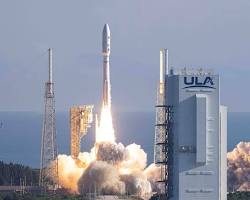
Amazon Leo Hits Milestone: Over 300 Satellites in Orbit After Dual Launch Week
The race for low-Earth orbit (LEO) internet reached a major fever pitch in late April 2026. Amazon Leo (the officially rebranded Project Kuiper) successfully surpassed the 300-satellite mark following a high-speed “dual-launch” week. By utilizing two different rocket families across two continents, Amazon has signaled that its deployment phase is finally moving at full throttle.
1. The Power of Two: Back-to-Back Missions
Amazon proved its “launch vehicle agnostic” strategy this week by successfully flying on both American and European hardware within 72 hours.
-
Mission LA-06 (April 27): A United Launch Alliance (ULA) Atlas V rocket took off from Cape Canaveral, carrying 29 satellites. This mission reportedly tied the record for the heaviest payload ever flown by an Atlas V.
-
Mission LE-02 (April 30): Europe’s Ariane 6 heavy-lifter (in its powerful 64-configuration with four boosters) launched from French Guiana, successfully deploying 32 satellites.
-
The Total: These two missions brought the constellation’s total count to 302 production satellites, officially making Amazon the operator of the third-largest satellite constellation currently in orbit.
2. The FCC Deadline: A Race Against Time
Despite the celebration, Amazon is under intense regulatory pressure.
-
The July 30 Deadline: Under its FCC license, Amazon must have half of its constellation (1,618 satellites) operational by July 30, 2026.
-
The Current Gap: With just over 300 satellites in orbit and three months to go, Amazon is far behind that original target. The company has already filed for an extension, citing the 2025 launch delays that affected the entire industry.
-
The “Leo” Rebrand: The shift from Project Kuiper to Amazon Leo in late 2025 was designed to simplify the brand for consumers as the service moves toward a public launch in “mid-2026.”
3. Starlink vs. Leo: The Competitive Landscape
While 300 satellites is a massive achievement for an indie company, Amazon is still chasing the “Goliath” of the industry.
-
Scale: As of May 2026, SpaceX’s Starlink has over 10,300 satellites in orbit and is active in more than 100 countries.
-
Differentiation: Amazon isn’t trying to beat Starlink on numbers alone. Instead, it is leaning into the AWS Ecosystem. CEO Andy Jassy recently noted that Leo will offer “private, direct access” to Amazon Web Services, making it a highly attractive option for governments and major enterprises like Delta Air Lines and Verizon.
4. Technical Edge: Optical Inter-Satellite Links (OISL)
One reason for the excitement around the Leo constellation is its advanced “laser” tech.
-
100 Gbps Lasers: Every Amazon Leo satellite is equipped with optical infrared lasers that allow them to “talk” to each other at 100 Gbps over distances of 2,600 km.
-
Fiber Performance: This technology allows data to move through the vacuum of space (where light travels faster than through glass fiber) to provide ultra-low latency internet even in the middle of the ocean or the Sahara desert.
5. What’s Next?
Amazon isn’t slowing down.
-
May 22 Launch: The next mission, LA-07, is already scheduled for late May on another Atlas V.
-
Peak Production: Amazon’s new factory in Kirkland, Washington, is reportedly ramping up to produce five satellites per day.
-
Beta Launch: Expect the first “Early Access” invites for the consumer version of Amazon Leo to start hitting select regions in June or July 2026.