











The “Crazy Worm” Invasion: Jumping Worms Threaten Western Soil
A highly destructive invasive species, the Asian jumping worm, has established a presence in Colorado and other Western states, prompting urgent warnings from agricultural officials. Originally from Japan and Korea, these pests—also known as “crazy worms” or “snake worms”—pose a significant threat to local ecosystems by rapidly depleting soil nutrients.
Why They Are Dangerous
Unlike beneficial earthworms that aerate deep soil, jumping worms live only in the top layer and consume organic matter at an unsustainable pace.
-
Nutrient Depletion: They devour the leaf litter and nutrients that plants need to survive, leaving the soil barren.
-
Soil Degradation: Their activity turns healthy topsoil into a dry, granular texture resembling coffee grounds, which leads to erosion and prevents proper root irrigation.
-
Rapid Reproduction: These worms can reproduce without mating, allowing a single individual to start a massive infestation quickly.
How to Identify Them
Officials in Colorado have spotted these worms in areas ranging from Boulder to Castle Rock and Denver. Look for these specific traits:
-
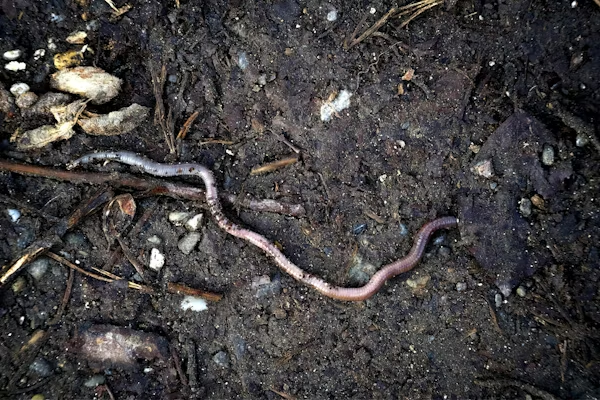
Appearance: Reddish-brown bodies growing up to 6 inches long with a distinct, smooth, milky-white band (clitellum) around their bodies.
-
Behavior: When disturbed, they thrash violently, jump, and move with a snake-like, erratic motion rather than a slow crawl.
-
Soil Signs: Look for the characteristic “coffee ground” soil texture on the surface of your garden beds.
Eradication and Prevention
There are currently no broad-scale chemical eradication methods, so containment is critical.
-
Mustard Pour Method: To remove them from your yard, mix 1/3 cup of ground yellow mustard seed with one gallon of water and pour it slowly on the soil. This irritates the worms and forces them to the surface for manual collection and disposal.
-
Don’t Use as Bait: Never use these worms for fishing, as they can easily escape and devastate new environments.
-
Be Careful with Plants: They often travel in the soil of potted plants; always inspect new nursery purchases for signs of the worms.