











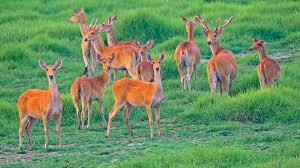
The Rare Swamp Deer Finds a New Stronghold
The Barasingha’s New Realm: A Conservation Victory
In May 2026, Mongabay reported a major success story for India’s wildlife: the rare Eastern Swamp Deer (Rucervus duvaucelii ranjitsinhi) is officially thriving in its new translocation site. For years, this specific subspecies was almost entirely restricted to Kaziranga National Park, making it dangerously vulnerable to the annual Brahmaputra floods.
The Risk of “Single-Site” Survival
Before this successful move, the Eastern Swamp Deer faced a precarious future:
-
The Flood Threat: Frequent flooding in Kaziranga often forced deer into human settlements, leading to poaching or accidents.
-
Disease Vulnerability: With the entire population in one area, a single outbreak of foot-and-mouth disease could have wiped out the subspecies.
-
Genetic Bottleneck: A concentrated population limits the genetic diversity necessary for long-term survival.
The Translocation Success: A New Stronghold
The May 2026 update confirms that the deer moved to a secondary, safer habitat (such as Manas National Park or Orang) have successfully adapted and, more importantly, started breeding.
Key Milestones of the Project:
-
Successful Calving: The birth of new fawns in the “new home” indicates that the habitat provides sufficient food, cover, and security.
-
Habitat Restoration: The move has encouraged the restoration of alluvial grasslands, which are essential for the deer’s diet and also benefit other rare species like the Pygmy Hog.
-
Community Protection: Local forest guards and community volunteers have been instrumental in preventing poaching during the critical “settling-in” phase.
The “Keystone” Effect
The thriving swamp deer population acts as a “keystone” for the wetland ecosystem:
-
Grassland Management: By grazing, the deer help maintain the height of the grass, which is vital for ground-nesting birds.
-
Prey Base Recovery: A stable deer population provides a natural food source for apex predators like tigers, helping to stabilize the entire food web of the new park.