











“Whatever Russia is Testing, it’s Sophisticated”: The High-Stakes Shadow Dance of Kosmos 2581 & 2583
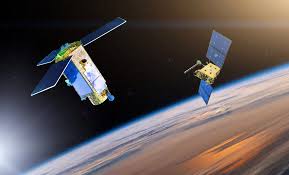
Space is no longer a silent void—it’s a stage for a high-tech game of “follow the leader.” As reported by Space.com on May 6, 2026, a series of mysterious maneuvers by two Russian military satellites has put global space trackers on high alert. On April 28, the satellites Kosmos 2581 and Kosmos 2583 performed a rendezvous that brought them within just 10 feet (3 meters) of each other while hurtling through orbit at 17,000 mph.
1. The “10-Foot” Encounter: Precision or Provocation?
The proximity event, detected 585 kilometers (363 miles) above Earth, was not a coincidental flyby. According to the tracking firm COMSPOC, the maneuver required “several fine, intentional adjustments.”
-
Tight Formation: Kosmos 2583 executed sophisticated propulsion burns to maintain a stable, incredibly close position next to Kosmos 2581.
-
The “Object F” Wildcard: Adding to the intrigue, the duo was joined by a third satellite (Kosmos 2582) and a smaller “sub-satellite” known as Object F, which drifted within 10 km of the formation without maneuvering.
2. Why This is Different from a Typical Docking
While 10 feet might seem like plenty of room, in the vacuum of space, it’s a hair’s breadth. Analysts highlighted three factors that make this maneuver “sophisticated”:
-
No Docking Hardware: Unlike the International Space Station, these satellites do not have docking ports or cooperative communication protocols. They are “flying freely,” using high-end optical sensors and autonomous avoidance algorithms.
-
Autonomous Coordination: The satellites appeared to operate in a “leader-follower” mode without ground-based intervention for the final proximity steps.
-
The “Inspector” Capability: This level of control is a hallmark of “inspector satellites”—craft designed to approach, photograph, or potentially interfere with other nations’ orbital assets.
3. The “Nesting Doll” Legacy
U.S. Space Command has expressed concern that these tests are part of the ongoing “Nivelir” program.
-
The Matryoshka Model: Russia has previously been accused of using “nesting doll” satellites, where a parent craft releases a smaller sub-satellite, which then releases a high-speed projectile.
-
Past Incidents: In 2020, similar maneuvers were observed when Kosmos 2542 “stalked” a U.S. spy satellite (USA-245), prompting accusations of testing anti-satellite (ASAT) technology.
4. Strategic Implications for 2026
-
The New Space Race: Experts believe these tests are a demonstration of Russia’s ability to approach and “service” (or sabotage) satellites in Low Earth Orbit (LEO).
-
The Debris Risk: Any collision at this range, even a minor tap, would create a massive cloud of space junk that could threaten all surrounding assets, including the ISS and the upcoming commercial space stations.
-
Russia’s Silence: As of May 8, Roscosmos has not disclosed the specific mission objectives for the Kosmos trio, simply stating they are “performing planned orbital activities.”