











The Forest Has Ears: Guatemala Deploys AI-Powered “Guardians” to Stop Illegal Logging
In a bold move to protect its remaining rainforests, Guatemala has officially integrated advanced Artificial Intelligence (AI) into its national conservation strategy. As reported by Mongabay in April 2026, the Maya Biosphere Reserve is now equipped with acoustic sensors—known as “Guardians”—that use AI to identify the sounds of illegal deforestation in real-time, allowing authorities to intervene before the trees are lost.
The initiative marks a significant technological leap for Central America, where traditional patrol methods have often been outpaced by the speed of illegal logging and land clearing.
How the “Guardian” System Works
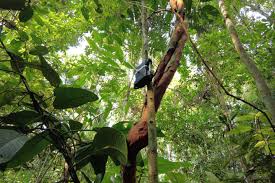
The technology, developed in partnership with the non-profit Rainforest Connection, relies on a network of solar-powered devices mounted high in the forest canopy.
-
The Acoustic Signature: The AI is trained to filter out the dense noise of a tropical rainforest (birds, monkeys, rain) and specifically identify “human-origin” sounds such as chainsaws, trucks, and gunshots.
-
Instant Alerts: When a suspicious sound is detected, the Guardian sends an encrypted alert via satellite or cellular networks to a centralized command center. This alert includes the exact GPS coordinates of the noise.
-
Rapid Response: Park rangers and community forest managers can be dispatched to the site within minutes, shifting the strategy from “documenting damage” to “preventing the crime.”
Protecting the Maya Biosphere Reserve
The Maya Biosphere Reserve (MBR) covers one-fifth of Guatemala’s land area and is home to iconic species like the jaguar and scarlet macaw.
-
The Threat of Cattle Ranching: MostTitle: The Forest Has Ears: AI Bioacoustics to Fight Illegal Logging in Guatemala
In a move to protect the sprawling Maya Biosphere Reserve, a new project is deploying “artificial ears” to detect environmental crimes in real-time. Reported by Mongabay on April 30, 2026, the initiative uses bioacoustic devices and AI models to monitor thousands of hectares of forest that are under constant threat from illegal cattle ranching and logging.
The project is a collaboration involving the Wildlife Conservation Society (WCS) and researchers from Cornell University, funded by the $100 million AI for Climate and Nature Grand Challenge run by the Bezos Earth Fund.
How the “Listening” Technology Works
Traditional forest monitoring often relies on satellites or manual patrols, both of which have “blind spots”—satellites can be blocked by cloud cover, and patrols can miss activity that happens between visits.
-
The Sensors: Sophisticated bioacoustic devices are installed high in the tree canopy. These sensors capture a continuous stream of the forest’s soundscape.
-
AI Identification: The audio is processed by machine-learning models trained to recognize “subtle acoustic signatures.” The AI is specifically taught to filter out the cacophony of birds, insects, and wind to identify:
-
Chainsaws: The distinct whine of logging equipment.
-
Gunshots: Signals of illegal poaching or security threats.
-
Engines: Trucks or motorbikes moving through restricted zones
-
-
Satellite Alerts: When a threat is detected, the device sends a small data package via satellite to an online repository, triggering an immediate alert for park rangers.
Bridging the Response Gap
One of the biggest hurdles in conservation is the “response lag.” According to Rony García Anleu of WCS Guatemala, if a ranger visits a site every two months, illegal loggers can clear an entire area just days after a patrol leaves.
-
Data Fusion: The bioacoustic alerts are designed to be used alongside camera traps, drone footage, and satellite data.
-
Empowering Rangers: The goal is to provide rangers with a spectrogram (a visual map of sound). By looking at the “shape” of the noise, rangers can verify the AI’s alert themselves, giving them the confidence to trek into remote, often dangerous areas to intercept criminals.
The Target: Maya Biosphere Reserve
The devices are being strategically placed in national parks and forest concessions that act as critical carbon sinks and biodiversity hotspots.
-
Cattle Ranching: This is the primary driver of deforestation in the reserve, where large tracts of forest are cleared and burned to create pasture.
-
Illegal Settlements: Human encroachment often follows newly cut logging roads, leading to permanent forest loss.
-
The Pantanal Connection: This Guatemalan project is part of a dual-pronged effort; a second component is being implemented in the Pantanal wetlands with WCS Brazil to monitor similar threats.
The Challenges Ahead
While the technology is revolutionary, it is not a “magic bullet.”
-
Logistics: Maintaining high-tech hardware in a high-humidity, high-heat tropical environment requires specialized solar power and weatherproof enclosures.
-
Trust and Training: For the system to work, the people on the ground must trust the data. Much of the current phase involves “trial and error” to ensure the AI doesn’t send rangers on “ghost chases” caused by false positives (like a falling tree sounding like a gunshot).