











Silence in Mondul Yorn: Cambodia Withholds Water Test Results Months After Mining Pollution Claims
The delay has left the Indigenous Brao people of Mondul Yorn village in a state of “languishing uncertainty,” caught between a suspicious environmental shift and a lack of official guidance.

The Timeline of Contamination
The crisis began in mid-2023, coinciding with the start of gold mining operations upstream in the Ta Veng district of Ratanakiri province.
-
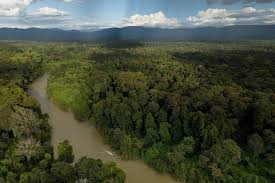
Physical Changes: Residents reported the O’Ta Bouk River—once crystalline—turned a “murky brown” year-round. They also noted the mud on the banks became unusually sticky.
-
Health Alarms: Villagers who came into contact with the water reported severe skin rashes, red welts, and persistent itching.
-
Ecosystem Collapse: Local fishers claim that fish have virtually vanished from the river, and farmers are terrified that using the water for irrigation will contaminate their crops.
The “Fake News” Dismissal vs. Quiet Action
The government’s handling of the situation has been marked by contradictory signals:
-
Initial Denial: In November 2025, after initial reports surfaced, the Minister of Mines and Energy, Keo Rattanak, dismissed the claims as “fake news.”
-
Secret Testing: Despite the public dismissal, the government quietly dispatched a technical team from the Ministry of Environment and the Inland Fisheries Research and Development Institute (IFReDI) in February 2026.
-
The Information Vacuum: While IFReDI posted photos of the testing on social media, the actual data—covering water, sediment, and fish samples—remains under lock and key.
Corporate Connections and Land Disputes
At the heart of the controversy is an 18,900-hectare mining exploration license awarded to a politically connected company.
-
Global Green: Documents seen by Mongabay suggest that a company called Global Green controlled the exploration site when the pollution was first reported.
-
The Mining “Ghost”: Despite the visible changes in the river and the presence of machinery, local authorities have reportedly told villagers that “no mining operation exists,” leading to fears of a conspiracy between local officials and the mining interests.
Regional Implications: The Mekong Connection
The O’Ta Bouk is not an isolated stream; it flows into the Sesan River, which eventually joins the Mekong River.
-
Wider Threat: The Mekong is the lifeblood for 60 million people in Southeast Asia. Experts warn that if mining effluent (often containing heavy metals like cyanide or mercury) is entering the O’Ta Bouk, it poses a long-term toxic threat to the entire downstream basin.
-
The Government’s “Good” Reports: Contrastingly, the Ministry of Environment recently released generalized reports claiming the Mekong’s water quality remains “good” for the first quarter of 2026, a statement that rings hollow for the Brao residents currently suffering from skin lesions.