











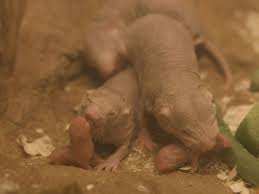
The Mole Rat Succession: The Brutal Biological Shift Behind a New Queen’s Reign
In the subterranean world of the naked mole rat, power isn’t inherited—it is seized through biological transformation and sheer physical dominance. A fascinating study highlighted by NPR in April 2026 reveals the extraordinary mechanisms at play when a mole rat colony undergoes a “succession crisis.”
When a long-reigning queen dies, the colony doesn’t just lose a leader; it loses the biological anchor that keeps the community’s strict social hierarchy in place.
The Suppression Effect: Ruling Through Pheromones
Naked mole rats are “eusocial,” a rare trait among mammals where only one female (the queen) breeds. She maintains this monopoly through more than just aggression:
-
Hormonal Control: The queen produces specific pheromones and high levels of stress hormones that she “shares” with the colony through physical contact and communal waste areas.
-
Biological Stunting: These chemical signals actually suppress the reproductive systems of all other females in the colony, keeping them in a prepubescent-like state.
-
The Power Vacuum: The moment the queen dies, this chemical suppression vanishes. Within hours, the “workers” begin to change.
The Transformation: Becoming the Queen
The race for succession is a literal “growth spurt.” Several high-ranking females, previously indistinguishable from common workers, begin a rapid physical transformation:
-
Spine Elongation: In one of nature’s most bizarre feats, the vertebrae of the aspiring queen actually grow and stretch. Her body becomes significantly longer to accommodate future litters of up to 30 pups.
-
Bone Density Shift: Her bones become denser and stronger to support her increased mass and the physical demands of defending her title.
-
Hormonal Surge: Her ovaries, which were once dormant, swell and begin producing massive amounts of estrogen and progesterone.
The Battle for the Throne
Biology is only half the battle. The transition period is marked by intense, often lethal, aggression.
-
The “Shove” Test: Potential queens engage in “shoving matches” to establish dominance. The female who can physically intimidate or out-push her rivals eventually wins the colony’s submission.
-
Vocal Signaling: Researchers have discovered that the new queen adopts a unique “chirp” or vocal signature that the rest of the colony learns to recognize as the voice of authority.
-
The New Order: Once a winner is established, she begins the cycle of suppression again, chemically resetting the reproductive clocks of her sisters and daughters to ensure her singular reign.
Why Scientists are Watching
Understanding mole rat succession isn’t just about curiosity; it has profound implications for human medicine.
-
Longevity Research: Queens can live for over 30 years—an incredible lifespan for a rodent. Scientists are studying how their bodies handle the massive hormonal surges of succession without developing cancer or other age-related diseases.
-
Bone Health: The ability to “grow” and reshape a spine in adulthood is a biological holy grail for researchers looking into spinal cord injuries and osteoporosis.