










Mining the Moon: NASA Invests in Technologies to Harvest Helium-3 and Lunar Resources
In a major move to kickstart the lunar economy, NASA announced on May 4, 2026, that it has awarded a $6.9 million contract to the Seattle-based startup Interlune. This project aims to solve one of the biggest challenges of deep-space exploration: In-Situ Resource Utilization (ISRU)—the ability to live off the land by extracting vital materials directly from the Moon’s surface.
The mission, dubbed Prospect Moon, is slated for a 2028 launch and will mark the first time volatile gases are measured by heating lunar soil (regolith) while on the Moon.
The “Holy Grail” of Lunar Resources: Helium-3
While the mission will extract various gases, the primary target is Helium-3, a rare isotope that is nearly non-existent on Earth but abundant on the Moon due to billions of years of solar wind.
-
The Power Potential: Helium-3 is considered a potential “fuel of the future” for clean, carbon-free nuclear fusion.
-
Earthly Applications: Even before fusion becomes a reality, Helium-3 is in high demand for quantum computing, medical imaging (specifically MRI), and neutron detection.
-
Market Demand: Interlune has already secured nearly $500 million in purchase orders from the U.S. Department of Energy and private quantum tech firms.
How the Technology Works
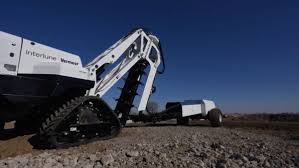
To extract these resources, Interlune is developing a “field laboratory” payload that will fly on a commercial robotic lander. The system includes:
-
Robotic Collection: A specialized arm and scoop to gather regolith.
-
Size Sorting: A device to sift through particles to find the most resource-rich grains.
-
Thermal Extraction: Hardware that heats the lunar soil to release trapped gases.
-
NASA-Derived Sensors: A mass spectrometer based on NASA’s MSOLO (Mass Spectrometer Observing Lunar Operations) technology to analyze the chemical makeup of the released gases in real-time.
Building a Sustainable Moon Base
This isn’t just about bringing resources back to Earth; it’s about building a “gas station” in space.
-
Fueling the Artemis Missions: By extracting hydrogen, future missions can create rocket fuel on the Moon, significantly reducing the cost of traveling further to Mars.
-
Life Support: The technologies used to harvest gases can also be adapted to extract water ice for oxygen and drinking water.
-
Site Preparation: The machinery developed for mining will eventually be used for lunar construction and site preparation for the Artemis Moon Base.
The Role of Small Business Innovation
The $6.9 million award comes from NASA’s Small Business Innovation Research (SBIR) Phase III program. This reflects a broader shift in NASA’s strategy: fostering a “commercial lunar economy” where private companies lead the way in resource development while NASA provides the foundational funding and technology heritage.