








How to Market to a Customer Who Never Sees Your Website
The Rise of the Bot-Consumer: HBR’s 2026 Marketing Shift
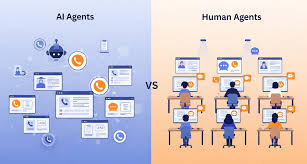
The Harvard Business Review (May 2026) has published a definitive research piece titled “Preparing Your Brand for Agentic AI,” by Oguz A. Acar and David A. Schweidel. The research confirms a brutal reality for 2026: Traditional marketing logic—designed for human emotion and visual attention—is fundamentally broken when the “shopper” is an AI agent.
Why Traditional Marketing is Failing
The research highlights three core reasons why 20th-century marketing playbooks are hitting a wall:
-
The Ad Blindness of AI: AI agents do not “see” banner ads, celebrity endorsements, or flashy packaging. They operate on machine-readable data, real-time pricing feeds, and API availability.
-
The Death of Sunk-Cost Bias: Traditional loyalty programs (like Amazon Prime) rely on humans feeling a “need” to use a service because they paid for it. AI agents ignore this bias, comparing total landed cost (item + shipping + tax) across every available platform in milliseconds.
-
Intent vs. Behavior: Platforms like Instagram see what you click on (behavior), but AI agents—integrated into your email, calendar, and health data—understand what you need (intent) before you even search for it.
The 5-Step Protection Plan for Brands
To survive the “Agentic Era,” HBR suggests brands must transition from human-centric design to Agentic AI Optimization (AAO):
| Step | Action Item | Goal |
| 1 | Structure Content for Machines | Ensure product specs, inventory, and ethics are available via high-speed APIs. |
| 2 | Define Boundaries & Consent | Build trust so the AI knows exactly when it has “permission” to buy on the user’s behalf. |
| 3 | Protect Data Visibly | Make your data security protocols “legible” to the AI’s security filters. |
| 4 | Observe Agent Ecosystems | Track how your brand appears in ChatGPT, Rufus (Amazon), and Gemini’s shopping lists. |
| 5 | Preserve Relationships | Plan for “human-in-the-loop” moments for high-emotion or luxury purchases. |
2026 Market Impact: The Tipping Point
The HBR analysis cites data showing this shift isn’t “future tech”—it’s already here:
-
Sales Impact: In late 2025, AI agents influenced $67 billion in global sales.
-
Order Value: Walmart’s AI assistant “Sparky” is driving 35% higher order values than unassisted human shopping.
-
Platform Threat: 75% of Google’s revenue and 97% of Meta’s rely on ads that AI agents simply skip, forcing a massive pivot toward “Zero-Click Commerce” models.