










The Price of Freedom: Why Cage-Free Farming is the New Economic Standard
The Cage-Free Blueprint: Economic Viability and Expert Insights
In May 2026, a landmark event at the European Parliament, hosted by Eurogroup for Animals and Compassion in World Farming, unveiled a critical new report: Financing the transition to cage-free farming in the EU. Compiled by the Institute for European Environmental Policy (IEEP), the report provides the most comprehensive data yet on why moving away from cages is not only ethical but economically essential for the future of farming.
The “Viability” Verdict: What the Data Shows
The report analyzes case studies from France, Germany, Poland, and Spain, debunking the idea that cage-free systems are a financial dead end.
-
Performance Parity: For pigs, well-designed free-farrowing systems can match the performance of traditional crates, provided the initial layout is optimized.
-
Minimal Cost Impact: In the dairy sector, transitioning calves to collective housing has a “minimal long-term impact” on operational costs while significantly improving health and growth rates.
-
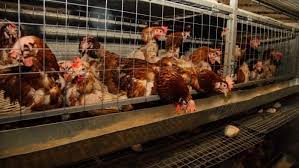
The Maturity of Alternatives: The egg sector (laying hens) already has mature barn and aviary systems. While running costs are higher (+22% for aviaries), they are offset by the growing retail and consumer demand for “ethical” eggs.
The 190-Day Countdown
The event also marked the start of the 190-day countdown to the European Commission’s expected legislative proposals in Autumn 2026.
-
The Broken Promise: Despite a 2021 commitment to “End the Cage Age” in response to 1.4 million citizens, formal legislation was delayed.
-
The “Várhelyi” Commitment: Animal Welfare Commissioner Olivér Várhelyi has confirmed that the cage-free proposals are a priority for the upcoming animal welfare package, citing strong public consensus (94% of Europeans support stronger animal protection).
Key Recommendations for a Fair Transition
At zyproo.online, we focus on the “architectural” changes needed for a system-wide upgrade. Experts are calling for three specific pillars of support:
-
Legislative Certainty: The single biggest barrier to farmer investment is uncertainty. A clear, legal timeline for the phase-out (target: 2026-2030) would unlock private bank loans for farm upgrades.
-
Targeted CAP Funding: Currently, much of the Common Agricultural Policy (CAP) funding rewards “maintenance” of existing systems. Experts argue this money must be redirected toward “transformation” to cover high upfront capital costs.
-
Trade Protection: To prevent a “race to the bottom,” the EU must implement equivalent welfare standards for imported products, ensuring European farmers aren’t undercut by cheaper, caged-system imports from non-EU countries.