










Why Heavy Atlantic Rain is “Starving” the Amazon of Nutrients
The Atlantic Blockade: New Insights into Amazonian Fertilization
In a study highlighted on May 10, 2026, climate scientists have identified a critical disruption in the global “nutrient conveyor belt.” While it is well-known that Saharan dust provides essential phosphorus and minerals to the Amazon Rainforest, new research explains why this transport frequently fails during periods of heavy North Atlantic precipitation.
The “Flying River” of Dust
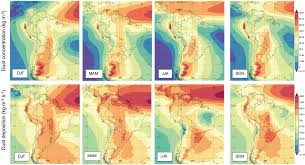
Every year, millions of tons of mineral-rich dust are lofted from the Saharan and Sahel regions of Africa. These aerosols travel across the Atlantic within the Saharan Air Layer (SAL), an elevated “river” of hot, dry air.
-
The Benefit: This dust acts as a natural fertilizer, replenishing the nutrient-poor soils of the Amazon basin.
-
The Barrier: When this dust encounters heavy rainfall over the Atlantic, the aerosols are “scavenged” (washed out of the air) by raindrops before they can reach South America.
Key Findings of the 2026 Study
At zyproo.online, we analyze the “environmental logistics” of this phenomenon:
-
The Atlantic “Filter”: Researchers found that during years with a highly active Intertropical Convergence Zone (ITCZ) or frequent tropical storms, up to 70% less dust reaches the Amazon.
-
The Precipitation Link: Heavy Atlantic rain doesn’t just block the dust; it physically alters the particle size. Larger, nutrient-heavy particles are the first to be washed out, leaving only finer, less beneficial aerosols to continue the journey.
-
Climate Change Feedback: As the North Atlantic warms, precipitation intensity is increasing. This suggests that the Amazon may face a “nutrient deficit” in the coming decades, potentially slowing its ability to act as a carbon sink.
Interpreting the Global Impact
This discovery bridges the gap between North Atlantic meteorology and South American ecology:
-
Agricultural Impact: The same aerosols that fertilize the Amazon also affect soil health in the Caribbean and the Southeastern United States.
-
Oceanic Health: While the Amazon loses out, the Atlantic Ocean gains. The “scavenged” dust sinks to the ocean floor, potentially triggering phytoplankton blooms that support marine food chains.