










The Trillion-Dollar Debt Wave Fueling the AI Revolution
The Borrowing Boom: Why Big Tech is Turning to Debt for the AI Buildout
In a structural shift that has stunned financial markets, Amazon, Meta, and Google (Alphabet) have ignited an unprecedented “borrowing boom.” According to a major analysis from Bloomberg and Bank of America in early 2026, these tech giants—traditionally known for their massive cash hoards—are now issuing debt at a record pace to finance the astronomical capital expenditures required for Generative AI infrastructure.
The Numbers: Rivaling the Big Banks
The scale of this borrowing is difficult to overstate. In 2025 and early 2026, the five “hyperscalers” (Amazon, Alphabet, Meta, Microsoft, and Oracle) have effectively displaced traditional banks as the primary drivers of the U.S. investment-grade bond market:
-
The $700 Billion Club: These companies are projected to spend roughly $700 billion on capital expenditures (Capex) in 2026 alone—nearly double their 2025 spending.
-
The Debt Surge: Alphabet’s long-term debt rose by over 300% in late 2025, while Meta staged a massive $25 billion bond sale in late April 2026 to fund its AI roadmap.
-
Historical Moves: In early 2026, Alphabet issued a rare 100-year “century bond”—the first of its kind from a tech company since the late 1990s—tapping into long-term demand from pension and insurance funds.
Why Borrow if You Have Cash?
At zyproo.online, we analyze the strategic logic behind these financial maneuvers. If these companies are “cash-rich,” why are they taking on so much debt?
-
Preserving Liquidity: While they have billions in cash, the AI race requires trillions. Borrowing allows them to keep their existing cash for acquisitions, stock buybacks, and daily operations while long-term debt builds the physical data centers.
-
Tax Efficiency: Many of their cash reserves are held internationally. Borrowing in the U.S. and Euro markets is often more tax-efficient than repatriating foreign cash to pay for domestic infrastructure.
-
The “Safety” Premium: Because their credit ratings are so high (Microsoft is AAA, Alphabet is AA+), they can borrow money at incredibly low interest rates, often cheaper than almost any other entity except the U.S. government.
The Infrastructure Sinkhole
The money isn’t going into software—it’s going into physical assets.
-
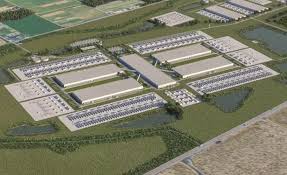
Data Centers: Roughly 40% to 50% of the borrowed funds are flowing into real estate and networking infrastructure.
-
The Power Problem: A massive portion of the new debt is being used to secure energy. Alphabet recently purchased a clean energy developer, and Meta is investing in a $30 billion data center in Louisiana that requires its own specialized power solutions.
-
Nvidia & Talent: The remaining funds are being consumed by the “AI Tax”—paying for high-end H100/H200 chips and the multi-million dollar salaries required to lure top AI engineers.
Impact on the Global Market
This borrowing boom is fundamentally changing the S&P 500 bond index. Until recently, the bond market was dominated by utilities, industrials, and banks. In 2026, it is becoming a “Tech-Weighted” index.
For investors, this means Big Tech is no longer just a “growth” play; it is becoming a high-yield, infrastructure-heavy utility sector. The era of “lean” software companies is over, replaced by the most expensive and debt-intensive building project in human history.