









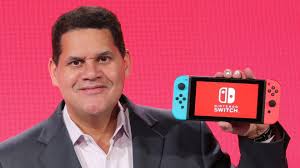
How Reggie Fils-Aimé Refused to Let Amazon “Push Him Around”
Standing Firm: Reggie Fils-Aimé Recalls the “Illegal” Showdown with Amazon
In a captivating lecture at New York University in May 2026, former Nintendo of America President Reggie Fils-Aimé pulled back the curtain on one of the most mysterious periods in gaming retail history: the years when you simply couldn’t buy a Nintendo console on Amazon. The reason, as Reggie bluntly put it, was that Amazon asked him to do something “illegal.”
The Request: Underpowering the Competition
The conflict occurred toward the tail end of the Nintendo DS and Wii era (circa 2010-2011). At the time, Nintendo was driving massive volume, selling over 10 million units a year.
-
The Amazon Demand: An Amazon executive called Reggie directly after negotiations with the sales team stalled. Amazon wanted “an obscene amount of financial support” from Nintendo to allow them to undercut Walmart’s prices.
-
The Goal: Amazon’s mentality was to have the absolute lowest price in the market to drive growth, even if it meant Nintendo had to effectively pay for Amazon’s discounts.
Reggie’s Red Line: “I Won’t Do Something Illegal”
Reggie’s response has now become a highlight of the 2026 NYU lecture series. He told the executive: “You know that’s illegal? I can’t do that.”
-
Price Discrimination: Under U.S. trade laws, providing a massive, exclusive financial subsidy to one retailer while denying it to others (like Target or GameStop) can be considered illegal price discrimination.
-
Protecting Relationships: Reggie argued that accepting the deal would have “put at risk the relationships we have with our other retailers.”
-
The Standoff: When the executive replied with “but this is what I want,” Reggie made the executive decision to stop selling to Amazon entirely.
Building Respect Through the “Blacklist”
At zyproo.online, we analyze the long-term impact of these leadership calls. For several years, Nintendo of America refused to supply Amazon with first-party hardware.
-
The Power Play: Reggie noted that the move “set the stage to say, ‘Look, you’re not going to push me around. This is the way we do business.'”
-
The Thaw: The relationship didn’t truly recover until the launch of the original Nintendo Switch in 2017. By then, Reggie says, Amazon was “right there at the table,” but with a “mutually beneficial approach” rather than a list of demands.
The 2026 Context: History Repeating?
The timing of Reggie’s story is especially relevant in 2026. Just last year, in mid-2025, Nintendo games briefly disappeared from Amazon again due to disputes over third-party resellers. This story serves as a reminder that the “Big N” has a long history of valuing its pricing integrity over the convenience of a single retail giant.
Reggie’s legacy remains one of “kicking ass and taking names,” but this NYU lecture proves that sometimes the biggest move is simply knowing when to walk away from the table.