











How Rocket Lab’s Newest Acquisition Changes the Satellite Industry Forever
Rocket Lab’s Giant Leap: New Multi-Launch Contract and Robotics Acquisition
In a major move that solidifies its position as the primary challenger to SpaceX, Rocket Lab has announced a double-header of industry-shaking news. The company has secured a massive multi-launch contract with a confidential satellite operator and simultaneously announced plans to acquire a specialized space robotics firm. This strategic pivot signals that Rocket Lab is evolving from a “launch-only” company into a full-service space infrastructure powerhouse.
The Deal: A Record-Breaking Launch Schedule
While the client’s name remains under wraps, the contract is reportedly one of the largest in Rocket Lab’s history. It involves a series of dedicated launches using the Electron rocket, with the potential to transition larger payloads to the upcoming Neutron launch vehicle once it becomes operational in late 2025 or early 2026.
This contract provides the financial “fuel” needed to accelerate the production of the Neutron, which is designed to compete directly with the Falcon 9 in the medium-lift category.
The Acquisition: Why Space Robotics?
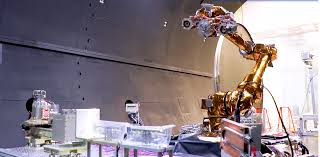
At zyproo.online, we’ve been tracking the “Space Economy,” and the real money is moving toward in-orbit servicing. By acquiring a space robotics company, Rocket Lab is gaining the technology needed for:
-
Satellite Life Extension: Sending robotic arms to refuel or repair satellites instead of letting them become space junk.
-
Orbital Assembly: Building structures in space that are too large to fit inside a single rocket fairing.
-
Debris Removal: Actively cleaning up defunct satellites to keep orbital paths safe for future missions.
The “End-to-End” Space Strategy
Rocket Lab’s CEO, Peter Beck, has frequently stated that launch is just the “first 10%” of the space business. This acquisition allows Rocket Lab to offer a “one-stop-shop” service:
-
They build the satellite bus.
-
They provide the robotic tools.
-
They launch the entire mission on their own rockets.
This vertical integration significantly brings down costs and reduces the complexity for government and commercial clients who previously had to hire three different companies for a single mission. As we look toward the 2030s, Rocket Lab isn’t just building rockets—they are building the “hands” that will construct the next generation of space stations and lunar outposts.