











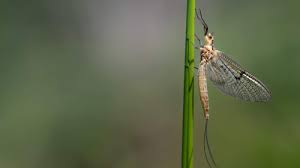
The Upward Spiral: Scientists Uncover the Mystery Behind the Mayfly’s ‘Vertical Dance’
For centuries, the rhythmic, bobbing flight of mayflies over riverbanks has been a hallmark of spring—but the mechanics behind it have remained a scientific enigma. As reported by The Guardian on April 29, 2026, a groundbreaking study has finally decoded the “vertical dance” of these ancient insects, revealing that their synchronized movement is a sophisticated survival strategy rather than a random swarm.
1. The Mechanics of the “Bob”
Using high-speed 3D cameras and aerodynamic modeling, researchers have discovered that the vertical pattern is a masterclass in energy conservation.
-
Passive Lift: Mayflies utilize a unique wing-flicking motion that allows them to “ride” rising columns of warm air (thermals) with minimal effort.
-
The Gravity Drop: After reaching a peak, they enter a controlled free-fall, using their long tail filaments (cerci) as rudders to maintain stability before starting the ascent again.
2. Why Dance? The Mating Geometry
The study confirms that this specific vertical movement is essential for the mayfly’s brief adult life, which often lasts only a few hours.
-
Visual Signaling: By moving vertically rather than horizontally, males create a “shimmering pillar” that is visible to females from much greater distances against the horizon.
-
Predator Confusion: The constant up-and-down motion makes it mathematically difficult for predators, like dragonflies and birds, to lock onto a single target, a phenomenon scientists are calling “dynamic flicker fusion.”
3. The “Canary in the River”
Beyond the beauty of the dance, the timing and intensity of these swarms are critical indicators of environmental health.
-
Water Quality: Mayflies are highly sensitive to pollution. Experts warn that in regions where the “dance” has become erratic or diminished, it signals a collapse in the underlying aquatic ecosystem.
-
The 2026 Surge: Interestingly, some parts of the UK and Europe have seen a “mega-emergence” this year, attributed to successful river restoration projects and a particularly wet early spring.
4. A Fragile Legacy
Despite the recent surge, the Guardian report highlights growing threats to this natural spectacle.
-
Light Pollution: Artificial lights at night “trap” mayflies, disrupting their vertical patterns and causing them to exhaust their limited energy reserves before they can reproduce.
-
Climate Shifting: Warmer water temperatures are causing mayflies to emerge earlier in the year, potentially “mismatching” them with the birds that rely on them for food.