











Hunting Earth’s Twins: Canada’s POET Mission Set to Scout for Habitable Worlds
In an ambitious move to secure a leading role in the global search for life, Canada has proposed a novel micro-satellite mission called POET (Photometric Observations of Exoplanet Transits). As reported by Phys.org and Universe Today in late April and early May 2026, the mission is designed to find Earth-sized planets orbiting the smallest, coolest stars in our cosmic neighborhood.
While the mission fits into a “shoebox-sized” frame, its scientific goals are massive: providing a high-priority target list for the James Webb Space Telescope (JWST) to scan for signs of life.
The Scientific Edge: Targeting “Ultracool Dwarfs”
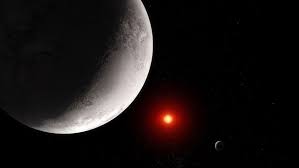
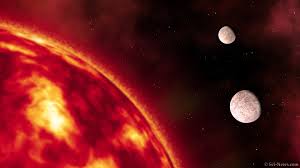
POET’s strategy is built on a clever bit of cosmic geometry. Most exoplanet hunters look at Sun-like stars, but POET focuses exclusively on ultracool dwarfs (stars only about 10% the size of our Sun).
-
The Transit Advantage: When an Earth-sized planet passes in front of a tiny star, it blocks a much larger percentage of the star’s light (about 1%) compared to a Sun-like star. This makes detection significantly easier and more precise.
-
Optimal Sensitivity: POET is equipped with a 20-cm telescope that views the universe in three bands: near-ultraviolet, visible, and short-wavelength infrared. The infrared band is specifically tuned to the “peak emission” of these cool, dim stars.
Mission Specs & Heritage
POET is not starting from scratch; it builds on a “quietly successful” lineage of Canadian micro-satellites that proved Canada could do world-class science on a budget.
-
Lineage: It follows in the footsteps of MOST (the “Humble Space Telescope”) and NEOSSat.
-
The Upgrade: Unlike its predecessors, which only saw in the visible spectrum, POET’s multi-wavelength sensors can tell the difference between a real planet and a “starspot” (a magnetic flare on the star’s surface that can mimic a planet’s shadow).
-
Cost Efficiency: Estimated at roughly $15–$25 million, POET provides a “defensible piece of the value chain”—finding the planets cheaply so that the multi-billion dollar JWST doesn’t waste time looking at empty stars.
The Target List
Researchers have already narrowed down the search area to ensure the mission hits the ground running:
-
POET Input Catalog: Scientists have identified over 3,000 candidate stars within 326 light-years of Earth.
-
Priority Targets: For the initial one-to-two-year mission, the team has selected 100 to 300 top-priority stars.
-
The “Goldilocks” Zone: POET is optimized to find planets with orbital periods between 7 and 50 days—the perfect distance for a planet orbiting a cool dwarf to maintain liquid water.
Timeline and Impact
-
Proposed Launch: Late 2029.
-
The “Feeder” Pipeline: If POET finds even a handful of nearby rocky planets, they will immediately become the highest-priority targets for biosignature searches (looking for oxygen, methane, or water vapor) with JWST or the future Habitable Worlds Observatory.