










Apple to Open iOS 27 to Rival AI Models: A Paradigm Shift for Apple Intelligence
In a significant departure from its traditionally “walled garden” approach, Apple is reportedly planning to allow users to swap out its internal AI models for third-party rivals across the entire iOS 27 ecosystem. As reported by The Hindu and Bloomberg on May 6, 2026, this move will transform Apple devices into a flexible “AI Platform,” letting users choose their preferred intelligence for system-wide tasks.
The change is slated for iOS 27, iPadOS 27, and macOS 27, expected to be officially unveiled at WWDC in June 2026 and released this fall.
The “Extensions” Framework
Apple is introducing a new system capability internally referred to as “Extensions.” This framework allows third-party AI apps installed via the App Store to “plug in” to native Apple features.
-
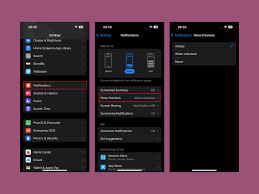
User Choice: Through the Settings app, users can select which AI service they want to power specific Apple Intelligence features.
-
Beyond Siri: While early rumors focused on Siri, the “Extensions” system will reportedly apply to Writing Tools (for text generation and editing) and Image Playground (for image creation).
-
Opt-in Model: AI providers like Google and Anthropic must “opt in” by adding compatibility to their iOS apps to appear as selectable options in the system menu.
Multi-AI Integration: Gemini, Claude, and More
While ChatGPT was the exclusive external partner at the launch of Apple Intelligence in 2024, the field is about to get much more crowded:
-
Google Gemini: Apple is reportedly in deep internal testing with Google’s Gemini models. Gemini is already expected to power parts of the “revamped” Siri coming later this year.
-
Anthropic Claude: Test builds of iOS 27 show active integration for Claude, allowing users to choose Anthropic’s reasoning-heavy models for complex writing and coding tasks.
-
Voice Customization: In a clever UI touch, Apple is developing a feature where Siri’s voice changes depending on which model is answering. For example, a standard Siri voice might handle a local calendar query, but a different voice would signal that Claude or Gemini is providing a “world knowledge” response.
The Strategic “App Store” Play
Analysts view this move as Apple applying its successful App Store business model to the AI era:
-
Revenue Sharing: By becoming the centralized platform for third-party AI, Apple can take a commission on the premium subscriptions (like Gemini Advanced or Claude Pro) that users sign up for through the iOS interface.
-
Risk Mitigation: By allowing third-party models, Apple shifts the responsibility for “hallucinations” or controversial AI content to the external providers, while keeping users within the Apple hardware ecosystem.
-
Closing the Gap: This “open” strategy helps Apple catch up with rivals like Microsoft and Alphabet by leveraging the best available technology rather than relying solely on its own delayed internal models.
What This Means for the iPhone 17
The timing of this report coincides with “blowout demand” for the recently released iPhone 17 and MacBook Neo.
-
AI as a Sales Driver: Apple expects sales growth of 14% to 17% for the upcoming quarter, banking on the fact that the iPhone is now the primary gateway for consumers to access competing high-end AI models in a unified way.