











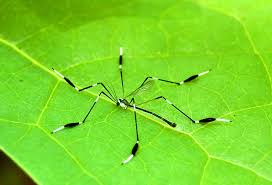
The Physics of Phantom Crane Fly Flight: “The Dandelion Strategy”
According to a study featured in Science News (March 24, 2026), researchers have finally cracked the aerodynamic secret of the Eastern Phantom Crane Fly (Bittacomorpha clavipes). Often described as looking like “flying snowflakes” or “drifting thistle seeds,” these insects use a unique passive flight strategy that has inspired a new generation of energy-efficient micro-robots.
1. Passive Lift: The “Inside-Out Umbrella”
While most insects rely on high-frequency wing flapping to stay aloft, the Phantom Crane Fly is a master of energy conservation.
-
The Posture: In updrafts, the fly stops flapping its wings entirely. Instead, it splays its six long, striped legs into an inverted cone shape (similar to an inside-out umbrella or a dandelion seed).
-
Drag-Driven Flight: Physicist Sarahi Arriaga-Ramirez (UC Berkeley) discovered that the fly’s legs generate enough drag to catch the wind and provide lift.
-
Dynamic Adjustment: The fly isn’t just a passive passenger. In stronger winds, it narrows the cone angle of its legs, reducing drag by approximately 20% to maintain a stable altitude without being blown off course.
2. Why the Legs are “Swollen”
If you look closely at their legs, the joints (tarsi) appear unusually thick. This isn’t just for show:
-
Tracheal Dilations: The legs are filled with air-filled sacs called tracheae.
-
Buoyancy vs. Weight: These air sacs make the legs incredibly light while increasing their surface area. This maximize the “wind-catching” effect without adding mass that would require more wing power to lift.
-
The Survival Trade-off: Adult Phantom Crane Flies live for only about a week and do not eat. They have a strictly limited “energy budget,” making this passive drifting strategy essential for finding mates before they expire.
3. Biomimicry: The “Crane-Fly Bot”
The research, presented at the Global Physics Summit in Denver (March 2026), is already being applied to robotics:
-
Shape Memory Alloys: Researchers at UC Berkeley and Carnegie Mellon have built miniature drones with legs made of shape memory alloys. These legs can bend or straighten when an electric current is applied, mimicking the fly’s ability to adjust its “dandelion cone.”
-
Passive Stability: By using flexible joints that naturally bend as wind speed increases, these robots can achieve stable flight even in turbulent conditions without complex on-board sensors.
Technical Flight Profile
| Phase | Action | Physics Principle |
| Ascent | Wing flapping with legs tucked | Aerodynamic Lift / Drag Reduction |
| Cruising | Wings still, legs splayed | Passive Drag / Wind Loading |
| High Wind | Legs narrow into a tight cone | Dynamic Drag Control |
| Stability | Legs act as a “self-righting” cone | Center of Pressure vs. Center of Mass |