










The Great Moose Migration: Why Millions are Obsessed with Sweden’s “Slow TV” Sensation
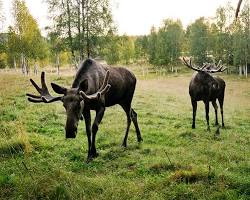
In a world dominated by rapid-fire social media clips and high-octane thrillers, a quiet revolution is happening in Sweden. Every spring, millions of viewers tune in to Den stora älgvandringen (The Great Moose Migration)—a 24-hour, unedited livestream of a forest where, quite often, absolutely nothing happens. Yet, as National Geographic and global fans have noted, this “Slow TV” phenomenon has become a cultural juggernaut, providing a much-needed digital detox.
1. What is The Great Moose Migration?
The show is a massive technical undertaking by Sweden’s national broadcaster, SVT.
-
The Setting: The cameras are focused on a U-shaped bend of the Ångerman River in Västernorrland, a historic crossing point that moose have used for thousands of years to reach richer summer pastures.
-
The Tech: The 2026 season features roughly 30 remote cameras, night-vision lenses, drones, and over 15 miles of fiber-optic cabling hidden beneath the moss and riverbeds.
-
The Pace: There are no hosts, no music, and no scripts. You might watch for 400 minutes before seeing a single moose silhouette emerge from the trees.
2. The Appeal of “Slow TV”
Why do nearly 10 million people watch a forest? Experts suggest it taps into a deep human need for tranquility.
-
Restorative Nature: The unedited rhythm and natural sounds—birdsong, wind, and water—provide a meditative escape from “algorithm fatigue.”
-
The Community: A dedicated online chat allows “moose-spotters” from around the world to alert each other when an älg (moose) appears. It’s been described as the “Super Bowl of nature,” where the fans root for the moose to make it across the water.
-
Layered Engagement: Many viewers treat it as a “digital window,” keeping the stream running in the background while they work, knit, or cook, creating a sense of being connected to the wilderness.
3. The Science of the Trek
While the show is calming, the migration itself is a feat of survival.
-
Energy Management: Unlike reindeer, moose don’t migrate hundreds of miles. Most travel between 30 and 90 kilometers. They move slowly to conserve energy after a long, hungry winter.
-
The Swimming Obstacle: Crossing the Ångerman River is the most dangerous part of the journey. Some moose dive right in, while others wait for days at the “entrance,” testing the water with a hoof before turning back.
-
Maternal Instinct: Female moose (cows) are often in a hurry to reach their summer ranges before they give birth, as the new vegetation provides the vital nutrients they need to nurse their calves.
4. High Stakes for the 2026 Season
Every year, the production team aims for new milestones. In 2023, they recorded 87 “swimmers.” For the current 2026 season, the goal is to break the 100-moose mark. The production itself is a “maverick” operation—cameras are often protected from the rain by DIY black plastic buckets wrapped in camo netting, proving that you don’t need a Hollywood budget to capture the world’s attention.