











Beyond the Map: The Global Effort to Protect Animals on the Move
The Borderless Journey
In the lush tall grasses of Brazil’s Pantanal, jaguars rest in a landscape that naturally ignores human-made lines. The Pantanal itself stretches across Brazil, Bolivia, and Paraguay, serving as a powerful reminder that what happens to a species in one country directly impacts its survival in the next. Whether it’s a whale crossing an entire ocean basin or a bird spanning continents, migratory species rely on a chain of healthy, connected habitats.
The Extinction Alarm
The latest science from the Convention on the Conservation of Migratory Species (CMS) paints a sobering picture.
-
Rapid Decline: Nearly half of all migratory species protected under the global treaty are in decline.
-
Extinction Risk: Roughly 25% of these species are now facing extinction.
-
Ecosystem Fallout: These animals aren’t just biological wonders; they are essential workers that pollinate our crops, disperse seeds, and support the fisheries that sustain millions of people.
Why Local Protection Isn’t Enough
Traditional conservation often focuses on protecting a specific park or a single national coastline. However, for a migratory animal, a safe “home” in one country is useless if they are hunted or lose their habitat in another.
-
The Problem of Fragmentation: Dams, fences, and urban sprawl act as roadblocks, turning a once-continuous journey into a series of dangerous obstacles.
-
Overexploitation: Illegal hunting and bycatch in fishing gear remain massive threats that require coordinated international law enforcement to manage.
The Path Forward: COP15 and Beyond
At the 15th Conference of the Parties (COP15) recently held in Brazil, representatives from over 130 countries gathered to discuss how to better synchronize their efforts.
-
Freshwater Focus: Migratory fish populations have seen some of the steepest collapses, with some species declining by 90% over the last 50 years. Maintaining the “integrity and connectivity” of entire river systems like the Amazon and Orinoco is now a top priority.
-
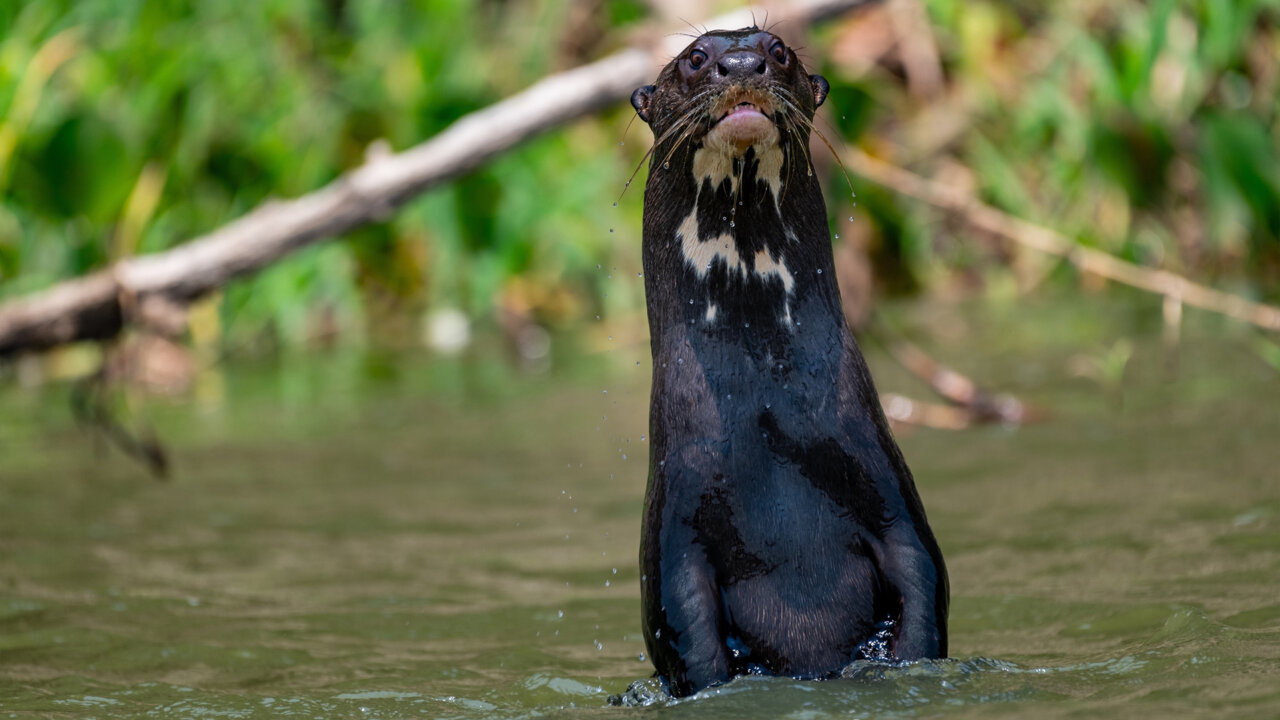
Strengthened Protections: New measures are being considered for iconic species like the giant otter, the striped hyena, and various highly migratory sharks.
Conservation at the Scale of Movement
The tools and the scientific knowledge to save these species already exist. The challenge is the “will” to act on a scale that matches the animals themselves. True conservation in our connected world means recognizing that we share these species with our neighbors—and their future depends on our ability to cooperate across every line on the map.