











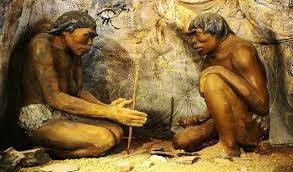
Ancient Humans Mastered Fire. Now, Burning Fossil Fuels and Blazing Landscapes Threaten to ‘Undo the World’
The Smithsonian Magazine recently published a profound look at the dual nature of fire—humanity’s first and most powerful tool, which is now turning into an existential threat. Published in April 2026, the article examines how the very thing that made us human is currently driving us toward a global climate crisis.
1. Fire: The Great Humanizer
The article explores the idea that fire was humanity’s “first act of domestication.” It wasn’t just about cooking; it was about social evolution:
-
Brain Growth: By cooking meat and tubers (dating back at least 1.7 million years to Homo erectus), our ancestors accessed more calorically dense food. This fueled the expansion of the human brain.
-
The First Social Hub: Hearths extended the day, allowing for storytelling, language development, and community bonds. Evidence from places like Qesem Cave (Israel) shows continuous fire use for over 200,000 years.
-
Mastery Over Spark: Recent discoveries in Barnham, England (Dec 2025/Jan 2026) have pushed back the date of intentional fire-making to 400,000 years ago, significantly earlier than previously thought.
2. The Second Face of Fire: The Pyrocene
Fire historian Stephen Pyne introduces the concept of the “Pyrocene”—a geologic age defined by humanity’s obsession with burning.
-
The Hidden Fire: Most people think of “fire” as wildfires, but the article points out that internal combustion engines, coal plants, and natural gas lines are all forms of “industrial fire.”
-
The Fossil Fuel Connection: Pyne uses a Jurassic Park analogy: burning fossil fuels is essentially “re-animating” the energy of ancient geology and releasing it all at once, overwhelming the modern ecosystem.
-
Landscape Disruption: From the apocalyptic orange skies of New York to the gray haze over Lake Michigan, the “friendly” fire of our ancestors has evolved into a global “blazing landscape” that threatens to undo the ecological progress of millions of years.
3. Evolutionary Lessons for Today
The Smithsonian emphasizes that our ancestors survived through variability selection—the ability to adapt to unstable environments.
-
Past Extinctions: 13,000 years ago, a combination of human-caused fires and a warming climate led to the mass extinction of megafauna in places like Southern California.
-
A Massive Warning: The article warns that while fire helped us adapt in the past, the current rate of burning is far faster than any previous era. We are now the “monopolists over fire,” and our power over the environment has reached a dangerous peak.
Key Data Points from the Article
| Era | Milestone |
| 1.7 Million Years Ago | Potential first use of fire by Homo erectus. |
| 400,000 Years Ago | Confirmed intentional fire-making (Barnham, UK). |
| 13,000 Years Ago | Human fires + Climate change cause mass extinctions. |
| 2026 (Present) | The “Pyrocene” reaches a tipping point due to industrial fire. |