











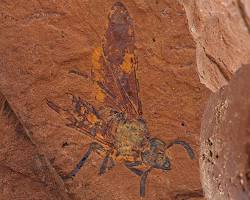
Perfect Fossils in Rust: The Extraordinary Discovery at McGraths Flat
In a groundbreaking study featured on ScienceDaily in late April 2026, researchers have revealed a stunning fossil site in New South Wales, Australia, that is rewriting the rules of paleontology. Known as McGraths Flat, this site preserves a 11- to 16-million-year-old rainforest ecosystem with a level of detail rarely seen in the fossil record.
1. The “Iron” Revolution
For centuries, paleontologists have looked for high-quality fossils in shale, sandstone, or volcanic ash. McGraths Flat is different—it is made of ferricrete, an iron-rich rock essentially described as “fossilized rust.”
-
The Mineral: The site is composed of goethite, a fine-grained iron mineral.
-
The Miracle of Preservation: Unlike traditional fossils that often only preserve hard bones or shells, the microscopic iron particles at this site filled individual cells of soft-bodied creatures before they could decay.
2. What Was Found?
The level of preservation at McGraths Flat is so high that scientists can see structures under a microscope that are usually lost to time:
-
Soft Tissues: Researchers have identified internal organs in insects and fish.
-
Cellular Detail: The fossils reveal individual pigment cells (melanosomes) in fish eyes and even tiny hairs on the legs of ancient spiders.
-
Plants and Feathers: Detailed impressions of rainforest leaves and delicate bird feathers have been found, offering a vivid snapshot of a Miocene-epoch jungle.
3. From Rainforest to Rust: How It Formed
Millions of years ago, this region wasn’t the dry farmland it is today; it was a lush, temperate rainforest.
-
The Billabong Effect: It is believed the fossils formed in a stagnant pool or “oxbow lake.”
-
Basalt Weathering: Nearby volcanic rocks (basalts) weathered down, releasing massive amounts of iron into the water.
-
The Quick Set: When organisms fell into this iron-rich water, the minerals acted like a natural cement, “mummifying” them in iron almost instantly.
4. Why This Changes Everything
This discovery is a “game-changer” for how scientists hunt for fossils:
-
New Search Parameters: Paleontologists now know they should look in iron-rich “ferricrete” landscapes—areas previously ignored because they were thought to be too acidic or harsh for preservation.
-
Climate Insights: By studying the specific plant and insect species at McGraths Flat, scientists can better understand how Australia transitioned from a wet, green continent to the arid landscape we see today.
5. A Window into the Miocene
The Miocene (roughly 23 to 5 million years ago) was a critical time when many modern plant and animal families first appeared. McGraths Flat provides the most detailed terrestrial record of this era in Australia, helping us bridge the gap between ancient dinosaurs and the wildlife of the modern world.