









The Dance of Light: A Guide to the 8 Phases of the Moon
Ever wonder why the Moon changes its shape from a thin silver sliver to a glowing white orb? As Space.com explains, the Moon doesn’t actually change its physical form; what we see is a shifting perspective of sunlight reflecting off its surface as it orbits Earth. This celestial cycle, lasting approximately 29.5 days, is known as the lunar cycle.
Why Does the Moon Have Phases?
The Moon does not produce its own light. Like a giant mirror, it reflects the Sun’s rays. At all times, exactly half of the Moon is illuminated by the Sun. However, because the Moon is constantly moving around Earth, the “angle” at which we see that illuminated half changes.
The 8 Phases of the Cycle
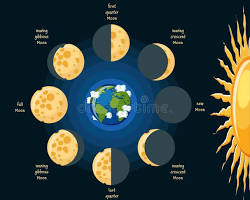
The lunar cycle is divided into eight distinct stages:
-
New Moon: The Moon is between the Earth and the Sun. The side facing us is dark, making the Moon invisible in the sky.
-
Waxing Crescent: A tiny “sliver” of light appears on the right side as the Moon begins its journey.
-
First Quarter: Half of the Moon’s disk is illuminated. It’s called a “quarter” because the Moon has completed one-quarter of its orbit.
-
Waxing Gibbous: More than half is lit, and the light continues to grow (“waxing” means growing).
-
Full Moon: The Earth is between the Moon and the Sun. We see the entire illuminated side.
-
Waning Gibbous: The light starts to decrease (“waning” means shrinking) from the right side.
-
Third Quarter: Once again, half the Moon is lit, but this time it’s the opposite side from the First Quarter.
-
Waning Crescent: The final sliver of light before the cycle resets with a New Moon.
Tidally Locked: The Moon’s “Dark Side”
A common misconception is that the Moon has a “dark side” that never sees light. In reality, every part of the Moon gets sunlight at some point. However, because the Moon is tidally locked, it rotates on its axis at the exact same speed it orbits Earth. This means we always see the same face of the Moon, while the “far side” remains hidden from our view on Earth.