










The Deep Ocean’s Warning: Antarctica’s Coldest Waters are Warming and Shrinking
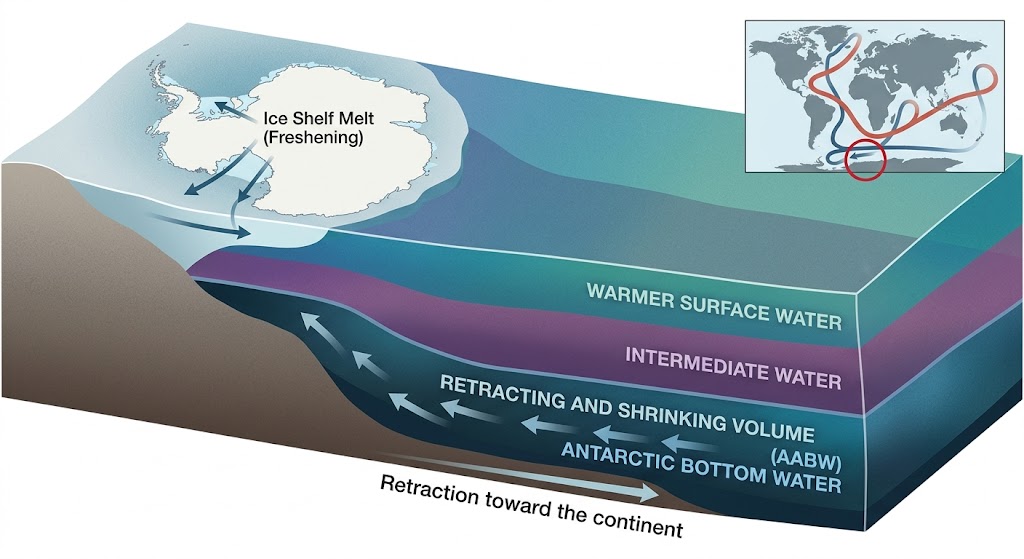
The Heartbeat of the Ocean Antarctica’s deep ocean acts as a vital “engine” for the world’s climate. In a process known as the global conveyor belt, cold, dense water sinks near the Antarctic coast and flows north along the seafloor, carrying oxygen and nutrients to the rest of the world’s oceans. However, new data shows this engine is losing its strength.
Warming and Freshening at the Bottom of the World Oceanographers have found that the deep water near the Antarctic continent is not only warming but also becoming “fresher”—meaning it contains less salt.
-
The Cause: Increased melting of Antarctic ice shelves is dumping massive amounts of fresh meltwater into the ocean.
-
The Consequence: Because fresh water is less dense than salt water, it doesn’t sink as effectively. This slows down the renewal of the deep ocean, effectively “trapping” older, warmer water at the bottom.
A Rapidly Changing Abyssal Environment While the deep ocean was once thought to be insulated from the rapid changes seen at the surface, this study confirms that the abyss is highly sensitive. The warming detected in these deep-sea trenches is occurring at a rate that has surprised many in the scientific community, indicating that human-induced climate change has reached the furthest corners of our planet.
Global Implications The slowing of these deep-sea currents has a “domino effect” on the global climate:
-
Reduced Oxygen Levels: As the water stops sinking, less oxygen is transported to the deep sea, threatening the unique marine life that lives in the dark abyss.
-
Sea-Level Rise: Warmer water expands. As the deep ocean heats up, it contributes to the thermal expansion of the oceans, further accelerating the rise of sea levels worldwide.
-
Nutrient Disruption: The deep-sea “upwelling” that brings nutrients to the surface for fisheries depends on these deep currents. A slowdown could impact global food security.
The Need for Long-Term Monitoring This discovery was made possible through the use of advanced deep-sea moorings and autonomous “Deep Argo” floats that can dive to depths of 6,000 meters. Researchers emphasize that continued, long-term monitoring of the Antarctic margin is the only way to predict how these changes will impact the global environment in the decades to come.