










The Long Goodbye: NASA Shuts Down Another Voyager 1 Instrument to Save Power
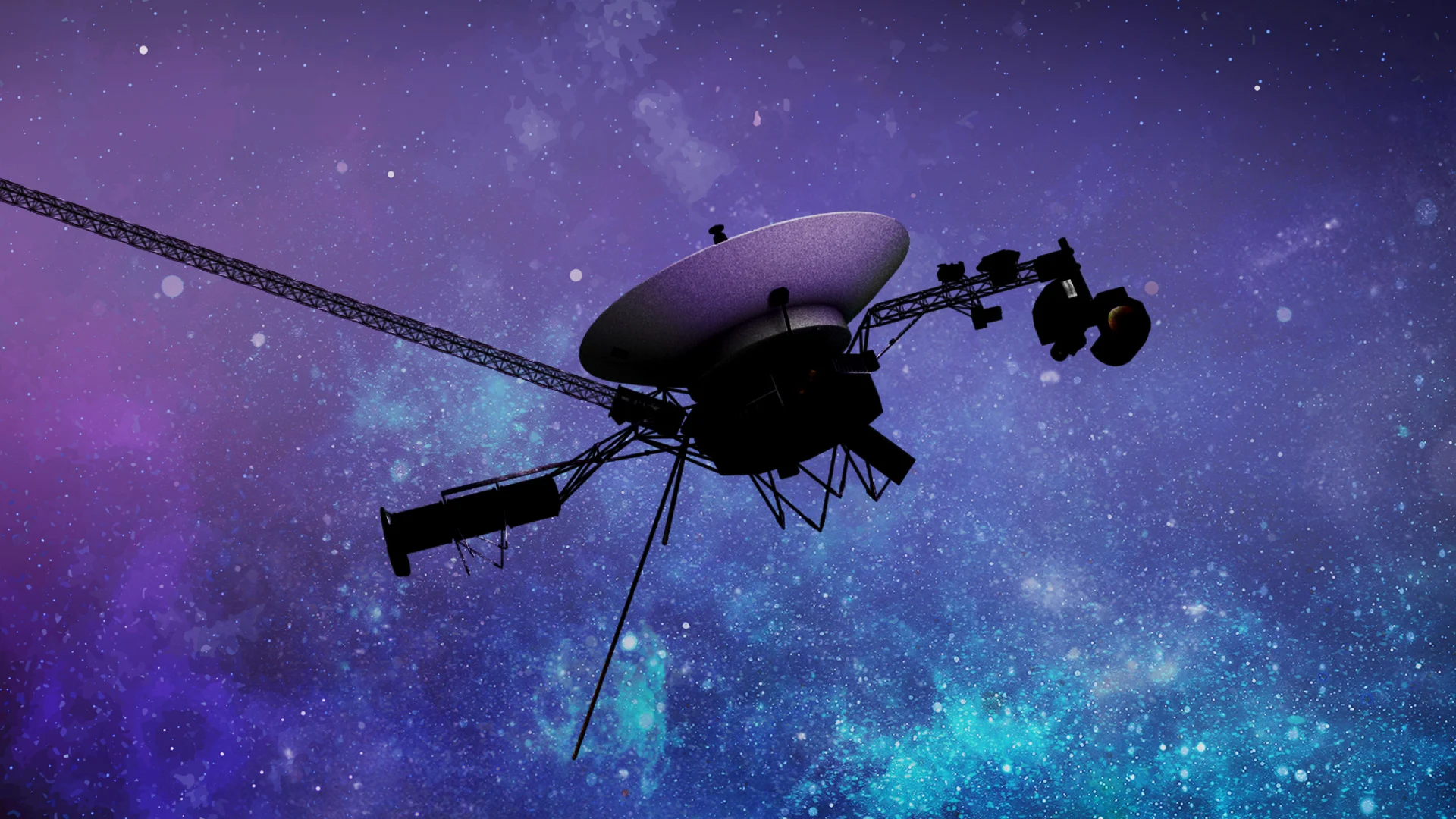
A Sacrifice for Science: Saving Voyager 1 Floating more than 25 billion kilometers (15 billion miles) from Earth, Voyager 1 is currently traveling through the “interstellar medium”—the vast space between stars. However, space is cold, and the probe’s power source, its Radioisotope Thermoelectric Generators (RTGs), is fading. To prevent the spacecraft’s fuel lines from freezing and to keep its communication systems alive, NASA’s Jet Propulsion Laboratory (JPL) recently sent a command to shut down the Low-energy Charged Particles (LECP) experiment.
Why the LECP? The LECP has been a workhorse of the mission since 1977, helping scientists study the solar wind and the boundary where our Sun’s influence ends.
-
The Mission Status: Voyager 1’s power output drops by about 4 watts every year. As of April 2026, it is running on less than half of the power it had at launch.
-
The Shutdown: On April 17, 2026, the LECP was powered down. This follows the shutdown of the Cosmic Ray Subsystem in 2025 and the imaging cameras decades ago.
-
What Remains: Only two science instruments are still active on Voyager 1: one that listens to plasma waves and one that measures magnetic fields.
The “Big Bang” Strategy The mission team isn’t giving up. They are developing a high-stakes plan called the “Big Bang.”
-
The Concept: Engineers plan to turn off several secondary devices simultaneously and switch to low-power alternatives to keep the craft’s core warm.
-
The Goal: If this plan succeeds, it could free up enough power to potentially reactivate instruments like the LECP in the future.
-
The Trial: The team will test this strategy on Voyager 2 first (which has slightly more power) before attempting it on Voyager 1 later this summer.
The Challenge of Distance Operating a spacecraft this far away is a masterclass in patience. Because of the incredible distance, it takes 23 hours for a command to reach Voyager 1 and another 23 hours for the confirmation signal to return to Earth. Every move must be calculated with extreme precision, as a single error could trigger a “power-down” mode that the probe might not recover from.
A Lasting Legacy Even as its “eyes” and “ears” are slowly turned off, Voyager 1 continues to be a pioneer. It is currently the only human-made craft providing in-situ data from the region of space beyond our Sun’s protective bubble. By sacrificing individual instruments now, NASA ensures that the heart of the mission continues to beat for as long as possible.