








How Android’s 2026 Update Turns Every App into an Agent
Android 2026: From Static OS to Autonomous Agent
In May 2026, during the annual Google I/O keynote, Google executives announced a foundational shift for the Android ecosystem. Billed as the “Intent-Centric Overhaul,” the 2026 update (likely Android 17) moves away from being a platform that launches apps and toward a system that executes complex “agentic” workflows.
The Core Pillar: Gemini Nano 3
The heart of this overhaul is Gemini Nano 3, a new multimodal on-device model designed specifically for the 2026 generation of mobile processors.
-
On-Device Reasoning: Unlike previous versions that required the cloud for complex logic, Nano 3 can “reason” locally. It can look at a flight confirmation in your email and a calendar conflict, then draft a rescheduling text in WhatsApp—all without your data leaving the phone.
-
System-Wide Vision: A new “Screen Awareness” layer allows the AI to “see” and understand the context of any app you are currently using, providing real-time suggestions based on what is displayed.
The “Intent” API: Killing the App Silo
Google is introducing a revolutionary developer tool called the Deep Intent API.
-
Cross-App Liquidity: Instead of you manually copying data from one app to another, the system treats every app as a set of capabilities.
-
Voice-First Navigation: Users can give “fuzzy” commands like “Organize my trip to Mumbai,” and Android will autonomously coordinate between maps, hotel apps, and budget trackers.
-
Privacy Sandboxing: To prevent AI “overreach,” Google is using Private Compute Core technology to ensure that while the AI “sees” your screen, that data is encrypted and invisible to even Google’s own servers.
2026 Hardware Requirements
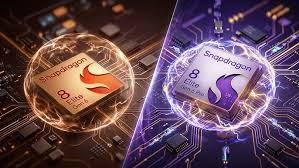
This AI overhaul isn’t just software; it requires a new class of hardware known as “NPU-First” architecture.
-
RAM Floor: Rumors suggest that flagship Android 2026 devices will require a minimum of 20GB of RAM to handle the always-on background AI models.
-
The “Power” Tradeoff: Google is working with Qualcomm and MediaTek on “Agentic Power Management,” which prioritizes battery for the NPU (Neural Processing Unit) over the traditional CPU.