











The Mysterious Lunar Light Show That Has NASA Scientists Scrambling for Answers
The Lunar Spark: Why Astronauts Are Seeing “Invisible” Flashes on the Far Side
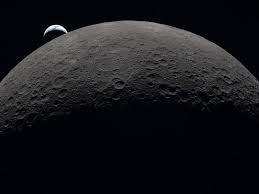
As the crew of NASA’s Artemis II mission orbited the Moon, they reported a phenomenon that has left scientists both baffled and ecstatic. While passing over the lunar far side, the astronauts witnessed brief, brilliant flashes of light—yet, when they checked the high-resolution mission cameras, there was nothing but darkness. This discrepancy has opened a new chapter in lunar science, highlighting the incredible sensitivity of the human eye compared to digital sensors.
The Phenomenon: Meteoroid Impacts or Static Storms?
Scientists believe these flashes are likely TLPs (Transient Lunar Phenomena). While the Moon has no atmosphere to burn up incoming debris, even a pebble-sized meteoroid hitting the surface at thousands of miles per hour creates a kinetic explosion.
However, there is a second, more “electric” theory. The Moon’s surface is constantly bombarded by solar wind, which can build up massive static charges in the lunar dust (regolith). When the sun hits certain craters, this charge might “discharge” in a spark—essentially a bolt of lunar lightning that lasts only a fraction of a millisecond.
The Camera Gap: Why Technology Missed the Show
For the technical community at zyproo.online, the “why” behind the camera failure is the most fascinating part.
-
Frame Rate vs. Human Persistence: Digital cameras capture images in “frames.” If a flash happens between frames, the camera misses it. The human eye, however, has a “persistence of vision” that can perceive a light burst lasting only 1/1000th of a second.
-
Dynamic Range: Space cameras are often calibrated to see the bright lunar surface without “blowing out” the image. This means they often filter out small, sudden changes in light that the human retina can easily pick up in high contrast.
The Scientific Payoff: Mapping the Invisible
NASA is excited because these flashes provide a “real-time” map of how the Moon interacts with the environment of deep space. By tracking where these sparks occur, scientists can identify:
-
Fresh Impact Sites: Finding where new craters are forming in real-time.
-
Electrostatic Hotspots: Areas where the dust is highly charged, which is vital information for future astronauts who need to keep their suits and equipment free from “sticky” lunar dust.
The Artemis II crew has proven that despite our billion-dollar satellites, the human presence in deep space is still our most sensitive scientific instrument.