











The Real-Life Kraken: Why Earth’s Largest Invertebrate is Still a Ghost in the Deep
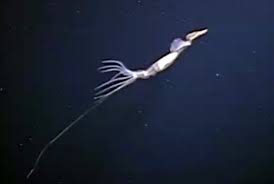
For centuries, sailors whispered stories of the “Kraken,” a beast capable of dragging entire vessels into the crushing depths of the ocean. While the myths were exaggerated, modern science has confirmed the existence of a creature that rivals those legends in sheer scale: the Colossal Squid (Mesonychoteuthis hamiltoni). As the world’s largest invertebrate, this deep-sea titan remains one of the most mysterious and elusive predators on the planet.
A Biological Nightmare: Built for the Dark Residing in the frigid, high-pressure waters of the Southern Ocean, the Colossal Squid is a masterpiece of extreme evolution. Unlike its cousin, the Giant Squid, which relies on suckers with small teeth, the Colossal Squid features swiveling bone-like hooks at the ends of its tentacles. These hooks allow it to lock onto prey—and defend itself against its only known predator: the Sperm Whale.
The World’s Largest Eyes To hunt in the “Midnight Zone” where sunlight never reaches, this cephalopod has evolved the largest eyes in the animal kingdom. Measuring up to 11 inches across—roughly the size of a dinner plate—these massive sensors are designed to detect the faint bioluminescent glow of shifting water caused by approaching predators or prey.
Weight vs. Length: A Heavyweight Champion While the Giant Squid may grow slightly longer due to its thin, whip-like tentacles, the Colossal Squid is the undisputed heavyweight champion. Reaching weights of nearly 1,000 pounds (495 kg), it possesses a much thicker, more muscular mantle. This massive body mass suggests it is an “ambush predator,” hovering silently in the dark before using its powerful beak to deliver a lethal strike.
The Ghost of the Southern Ocean Despite its size, the Colossal Squid is rarely seen by human eyes. Most of what we know comes from specimens found in the stomachs of whales or accidental captures by deep-sea fishing trawlers. At zyproo.online, we believe the “Kraken” isn’t just a myth—it’s a reminder that our oceans still hold giants that defy our understanding of biology.