











Beyond the Atmosphere: James Webb Telescope Captures First Direct Glimpse of a Barren Alien Surface
In a landmark achievement for astronomy, the James Webb Space Telescope (JWST) has successfully bypassed the thick atmospheres that usually cloud our view of distant worlds to study an exoplanet’s surface directly. The subject of this historic analysis is LHS 3844 b, a “super-Earth” located approximately 50 light-years away.
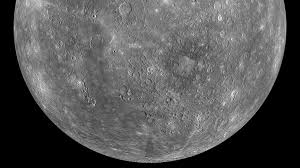
What the telescope found is a world that feels hauntingly familiar yet entirely alien—a dark, hot, and airless rock that closely resembles a much larger version of our own Mercury.
A World of Extremes
LHS 3844 b is a planet of harsh contrasts. It orbits a cool red dwarf star at an incredible speed, completing a full “year” in just 11 hours. Because it is tidally locked—meaning one side always faces its star—the “dayside” is baked in perpetual radiation while the “nightside” remains in eternal darkness.
Key Findings from the Surface:
-
Intense Heat: The dayside temperature sky-rockets to roughly 1,340 degrees Fahrenheit (725° Celsius).
-
Zero Atmosphere: The data suggests the planet is completely devoid of an atmosphere, leaving its surface fully exposed to the vacuum of space.
-
Volcanic Composition: By measuring the infrared light emitted from the planet, scientists identified a surface dominated by basalt—a dark, volcanic rock rich in iron and magnesium, similar to the lunar plains.
How Webb “Saw” the Surface
Typically, astronomers study exoplanets by looking at how their atmospheres filter starlight. However, for LHS 3844 b, the team used the Mid-Infrared Instrument (MIRI) to observe “secondary eclipses”—the moments when the planet moves behind its star.
By isolating the heat signature of the planet itself, researchers could compare the light to minerals found on Earth, the Moon, and Mars. This allowed them to rule out an Earth-like crust (which requires water and plate tectonics) in favor of a more primitive, volcanic exterior.
Why This Discovery Matters
This isn’t just about one planet; it’s a proof of concept. For the first time, we have the technology to decipher the geology of a world orbiting a distant star.
-
Space Weathering: Scientists believe the planet may be covered in a fine-grained “regolith” (space dust) created by billions of years of meteorite impacts and radiation.
-
Planetary Diversity: This discovery confirms that many rocky planets in our galaxy may be airless “lava worlds,” helping us narrow down which types of planets are truly capable of supporting life.
What’s Next?
Follow-up observations are already being planned to determine if the surface is solid rock or a loose layer of weathered material. Every new data point brings us closer to understanding the true variety of the cosmos.